
Despite protests and pleas, the Minnesota Sports Facilities Authority announced October 26 that they will go ahead and allow the use of the derogatory team nickname of the Washington NFL franchise in the Metrodome at the November 7 game. The American Indian Movement — AIM of Twin Cities and AIM Patrol of Minneapolis — had called on the MSFA to ban the use of the mascot and logo inside the publicly-funded stadium and now plans to protest the game. Continue reading
Category Archives: Uncategorized
Let them eat cake
Food stamp help takes a hit November 1, as benefits decrease for hungry people across the country.
The reason for the cut? The federal government raised the amount of Supplemental Nutritional Assistance Program (SNAP = new name for food stamps) during the recession. The increase was small, and temporary. Now it’s going away. Continue reading
Filed under Uncategorized
One in four: The toll of domestic violence
One in four women. One in seven men.
According to the Centers for Disease Control, that’s the number of women and men who have been the victims of “severe physical violence by an intimate partner” during their lifetime. Most of the violence goes unreported and unnoticed outside the home. Continue reading
Filed under Uncategorized
Living in The Space Between

Who cares about affordable housing? For a start, baby boomers thinking about downsizing and members of Generation Y, wanting desperately to find a way out from the basement bedroom, need affordable housing. So do single moms piecing together multiple part-time jobs and the vast middle group of workers watching wages erode. Continue reading
Filed under Uncategorized
Shooting down community
When the text message from your daughter at college begins: “If you are listening to the news, don’t worry, I’m safe and locked in my room” — you worry. Continue reading
Filed under Uncategorized
Lockdown at UW-Madison
Filed under Uncategorized
The secret court that decides the rest of us have no secrets
Talking with some friends recently, I realized that even what’s known about the secret FISA court isn’t well-known, so I decided to write a brief intro.
FISA means the Foreign Intelligence Security Act. The FISA court (also known as the Foreign Intelligence Security Court or FISC) is set up “to hear applications for and grant orders approving electronic surveillance anywhere within the United States …”
There’s just one FISA Court, made up of 11 federal judges. They are appointed by the Chief Justice of the U.S. Supreme Court. Each of the judges serve on the FISA court for a term of seven years, and may not be reappointed for a second term.
The FISA court was originally set up in 1978. Before 9/11, writes Nina Totenberg of NPR:
“If the government wanted to listen in on conversations or other communications in the U.S., it had to get a warrant from the foreign intelligence court based on individualized suspicion and probable cause to believe that national security was being compromised.”
After 9/11, the Bush administration started wiretapping without warrants. They got caught, and then, explains Totenberg:
“After news reports blew the lid off the administration’s dodge, Bush submitted to Congress proposed changes in the law, which were adopted in 2008. Those changes allowed the government to conduct the so-called PRISM program and monitor any and all conversations that take place between the U.S. and someone in a foreign country.”
Today’s applications for electronic surveillance are different from normal search warrants. Besides PRISM, there’s also collection of “metadata” from all U.S. telecom companies on all phone calls and email.
The FISA court hearings are secret. Its rulings are classified. The targets of surveillance have no notice, either before or after the ruling. Since 2008, the court has approved surveillance systems, not just individual warrants.
Each year the Attorney General has to report on the total number of applications for electronic surveillance and the total number approved, denied or modified. Those reports provide the only official information about the court.
Writing in The Daily Beast, Jennifer Granick and Christopher Sprigman summarize what actually happens now:
“Like a modern-day Star Chamber, the FISC operates “ex parte”—that is, the applications and arguments are one-sided, and only the government appears before the court. There is no one before the court to speak for the public’s interest in the privacy of its communications. And in a fight where only one side is allowed to show up, the government’s view almost always prevails. Since 2008 the administration has submitted over 8,000 surveillance requests to the FISC. Only two have been denied. The FISC has denied not a single surveillance request in the past three years. By any measure, the court is simply a rubber stamp for the executive branch.”
Glenn Greenwald notes that the rubber stamp nature of the court preceded 9/11:
“In its total 34 year history – from 1978 through 2012 – the Fisa court has rejected a grand total of 11 government applications, while approving more than 20,000.”
Since Edward Snowden’s disclosure of secret NSA documents, more information about the FISA court has come to light. Based on information about the gathering of U.S. phone and electronic communication records, the Electronic Privacy Information Center filed a petition asking the U.S. Supreme Court to stop this particular aspect of NSA spying. SCOTUSblog describes the secrecy of FISA proceedings in a post about the EPIC lawsuit:
“Attached to the petition is a copy of an order dated April 25 and signed by Roger Vinson, a U.S. District Court Judge who sits in Florida but who issued this order in his temporary capacity as a judge of the FIS Court. Because that order was issued in secret, the petition noted, it is not officially on record anywhere. All judges who sit temporarily on that court and pass upon government intelligence surveillance requests are named by Chief Justice John G. Roberts, Jr.”
What that order mandated, EPIC argues, is the “production of millions of domestic telephone records that cannot plausibly be relevant to an authorized investigation.” And, because of the structure of the federal law setting up the FIS Court and directing its operations, the petition said, “no other court may grant the relief that EPIC seeks.”
One more quotation, hopefully still relevant to today’s FISA and NSA proceedings.
Fourth Amendment
The right of the people to be secure in their persons, houses, papers, and effects, against unreasonable searches and seizures, shall not be violated, and no warrants shall issue, but upon probable cause, supported by oath or affirmation, and particularly describing the place to be searched, and the persons or things to be seized.
Filed under Uncategorized
What really happened to Terrance Franklin? Three months and counting …
Terrance Franklin was shot to death by Minneapolis police on May 10. He was shot after a police chase, in a basement laundry room, where the only people present were Minneapolis police officers, their dog, and Terrance Franklin. Since then, demonstrations and demands for action and information have been met with the standard “we’re investigating” line from MPD and promises of a grand jury investigation. But no information. Not from the police. Not from the coroner. Not from the county attorney. Continue reading
Filed under Uncategorized
Prison phone justice campaign: Celebrating a victory
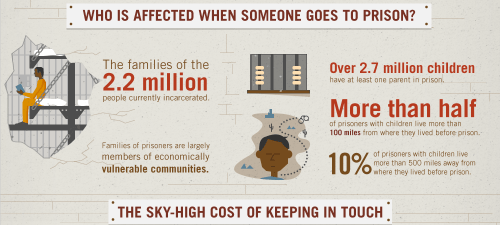
“Dad has to purchase phone time through a prison phone system. Fifteen minutes cost $3.30 plus a $1 calling fee, more than for regular long-distance service. If my dad calls and we miss it, he is still charged a calling fee. We are limited to 300 minutes per month and 15 minutes per phone call. Using all his time costs about $86 a month.” (From Feeling Disconnected) Continue reading
Filed under Uncategorized
Sequestering the Constitution
Imagine the David-and-Goliath posture of the federal defenders office in Minnesota. Its eight attorneys take on 70-75 percent of all criminal defense in the federal district court. They are up against 46 attorneys prosecuting those cases for the criminal division of the U.S. Attorney’s office. But wait — it gets worse. Continue reading
Filed under Uncategorized

 Mary Turck