

Katherine Kersten inspired me to prayer this morning, and by that I mean more than the usual “Oh, God, not her again!” After reading her heated attack on the dastardly new “Church of Sustainability” that threatens sanity, morals, corporate profits and the very existence of the United States of America, I turned to the recent pronouncement by Pope Francis on the very same subject. And I had to wonder: was KK really so exercised over what university students are doing, or was the real trigger for her outrage the decidedly anti-capitalist, pro-environmental teaching of Pope Francis? Continue reading
Author Archives: Mary Turck

Weeds, compost and recycling in St. Paul
After ten days of intensive garden work, I’ve finally beaten back the weeds that tried to take over while I was on vacation. Now I have piles of branches and boxes and buckets of weeds to dispose of. Packing weeds into the car and driving to the compost center seems perverse, and not very environmentally friendly. But it’s my best solution — despite years of trying, I haven’t devised a way to compost successfully at home. The nearby Ramsey County compost center offers both a place to dispose of weeds and branches (and kitchen waste) and a return load of wood chips for mulch. Continue reading
Filed under environment, St. Paul Notes
Power in the words
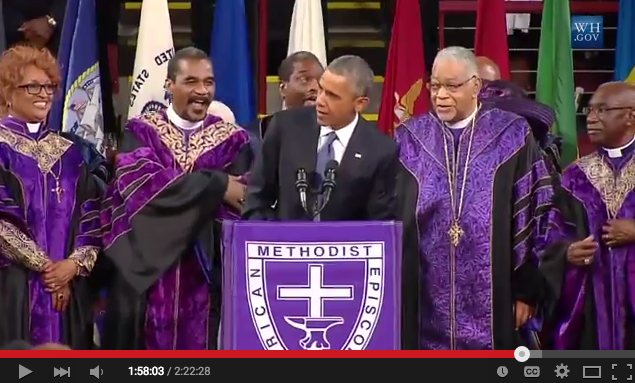
Screen shot from YouTube video of President Obama’s eulogy for Reverend Clementa Pinckney
I love playing with words in puns or poetry, and working with words to build accurate descriptions and stories of the world, to sketch out parameters of relationships and agreements, to define rules and contracts and compacts. I love the way words resonate, passion in the mouths of preachers and the soul-catching rhythms of hymns.Words purely amuse and amaze as they flash and dance in the back-and-forth of humor and repartee. I believe in the power of words to communicate and cajole and convince, to create visions of new worlds.
Today was a day for words of power: the Supreme Court decision on marriage equality and President Obama’s eulogy for the Reverend Clementa Pinckney. Continue reading
Filed under Uncategorized
Obamacare, fair housing and a little jiggery-pokery
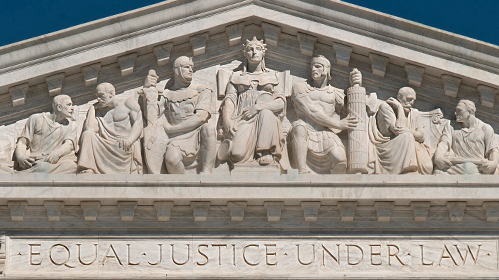
image from Supreme Court website
Three cheers for SCOTUS! Well – two cheers today for the health care and fair housing decisions, and here’s hoping we can give the third cheer soon for a marriage equality decision. The Supreme Court of the United States again upheld Obamacare, and also issued a tremendously important fair housing decision that could have specific application to Twin Cities housing policies. Rightwing Justice Antonin Scalia is so mad he’s almost frothing at the mouth, saying the legislation should be called “SCOTUScare” and condemning the court for “interpretive jiggery-pokery.” Personally, I think that we could use a little more of that jiggery-pokery. Continue reading
Filed under health care, health insurance, housing, human rights
Bring back the Citizens’ Board — protect Minnesota waters

July 1 will be “a sad day for democracy, a sad day for citizen engagement, open government and environmental protection in Minnesota,” said Jim Riddle at the last meeting of the Citizens’ Board of the Minnesota Pollution Control Agency today. That date marks the legislative end of the Citizens’ Board, in retaliation for the board’s 2014 decision to require an environmental impact statement from a proposed 9,000-cow mega-dairy operation in Baker Township, Stevens County near Chokio, Minnesota. Continue reading
Filed under agriculture, environment
Legislature tells fox to choose watchdog for hen house
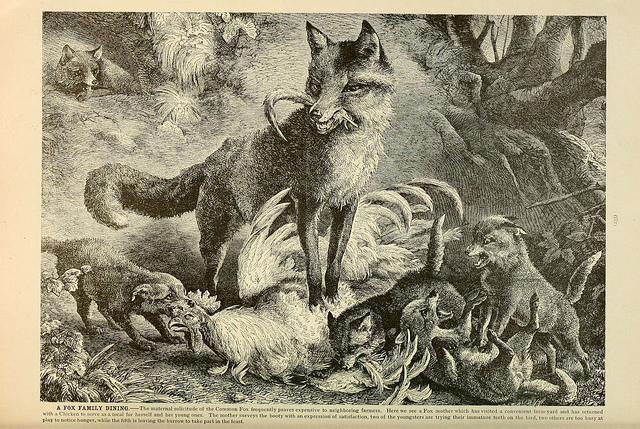
Brehm’s Life of animals : Volume 1, Mammalia
Chicago :Marquis,1895.
http://biodiversitylibrary.org/item/37942 Some rights reserved by BioDivLibrary
The West Central Tribune quoted Willmar city council member Ron Christenson speaking at a council committee meeting earlier this year: “I remember the advice: ‘Don’t forget. The City Council can do anything … even if it is illegal.'” That sounds a lot like the response I got from a judge in another Minnesota town back in the day: “I know the law, and I don’t have to follow the law.” Small towns and counties often run on their own rules, set by governing cliques who don’t give a damn about law and individual or minority rights. That alone is a reason for independent oversight over local finances and government — a protection that the Minnesota legislature just eliminated. Continue reading
Filed under Uncategorized
Three thoughts about the Charleston church massacre: The flag, the church, the way forward

Photo of Emanuel AME Church by Howard Arnoff, published under Creative Commons license.
On the day after the shooting, the U.S. flag was lowered to half mast in Charleston. The South Carolina flag also flew at half mast. The Confederate flag did not. Continue reading
Filed under Uncategorized
Fast Track to nowhere: Part 3 — Defeating Fast Track, for now

Photo by Wendy Colucci of the CNY Area Labor Federation, AFL-CIO, republished under Creative Commons license.
Was Fast Track really defeated by Democrats in the House of Representatives? Way to go! But wait — like a zombie, this one’s going to keep on coming back, so the fight is not over yet. Here’s how yesterday’s vote on Fast Track for the Trans-Pacific Partnership (TPP) went down, and what might happen next. Continue reading
Filed under Uncategorized
Fast Track to nowhere: Part 2 – Throwing caution to the winds
Photo by Wendy Colucci of the CNY Area Labor Federation, AFL-CIO, republished under Creative Commons license.
Despite the secrecy around specific free trade pact provisions in the Transatlantic Trade and Investment Partnership (TTIP), we know that “international standards” rule and local / state / national food rules get overruled. In practice, look for weakening European food safety and food integrity rules, and strengthening the hand of agribusiness. The Institute for Agriculture and Trade Policy (IATP) summarizes: Agribusiness is “pushing to rollback regulations that hinder their profits at the expense of food safety, farmers and ranchers, consumers and animal welfare.” Continue reading
Filed under agriculture, environment, food and farming
Brendan Behan, Dublin and the Minnesota legislature
 Brendan Behan’s poster on a Dublin alley wall has a message you might want to send to the Minnesota legislature, or the U.S. Congress: “I have a total irreverence for anything connected with society except that which makes the roads safer, the beer stronger, the food cheaper and the old men and old women warmer in the winter and happier in the summer.” Roads, anyone? Food stamps? Heating assistance? Continue reading
Filed under children, education, environment
 Mary Turck