Credit where credit is due

The ongoing debate over fair use ranges AP’s attacks on aggregators to the question of when and how bloggers credit the original sources of stories. A parallel complaint from the blogosphere focuses on how the legacy media pick up stories or ideas from blogs, with out giving any credit to the source.

Recently, for example, Harvard’s Nieman Journalism Lab reported:

The Post prohibits crediting blogs and other competitors for scoops, according to the reporter, Alex Ginsberg, who noted the zoning violation two weeks after it was reported by the blogger, who calls herself Miss Heather. “Post policy prevented me from crediting you in print,” Ginsberg wrote in a gracious comment on the blog. “Allow me to do so now. You did a fantastic reporting job. All I had to do was follow your steps (and make a few extra phone calls).”

A Post spokesperson, Suzi Halpin, says the Post does credit bloggers “all the time.” I don’t read the Post, but I don’t see local news media crediting bloggers or other new media very often.

As the editor of the Twin Cities Daily Planet, I don’t recall any time that the local legacy media credited us in print, even when we clearly broke stories before they did. In a way, credit for breaking stories beside the point – part of our mission is to tell under-reported stories and cover under-reported communities, and to alert the rest of the media to these stories. We want them to follow up — with their far greater resources — and to deepen and broaden the coverage.

In August, Chris Ahearn of Thomson Reuters suggested that we need some sensible guidelines for linking and attribution, while acknowledging the value to news producers and consumers of the “link economy.” As an overall guideline, he proposes “a general agreement among community members to treat others’ content, business and ideas with the same respect you would want them to treat yours.”

Colombia J-School blogger C.W. Anderson got more specific in an article asking “What would fair use look like in an online era?” Anderson points out that “the digital information world has its own ethical standards and best practices, practices that may not be written down but have emerged out of the internet’s own practices and history.” Here’s part of what he has to say about the importance of linking:

It should, by 2009, go without saying that any article making use of information read, cited, discussed, or originated elsewhere should clearly link back to that information. This is kindergarten-level internet protocol. …  (I should note, at this point, that this would probably do more to show traditional, non-linking news orgs are violation of fair use than bloggers, but, hey, you get what you ask for if you open this can of worms.)

If we set linking as a baseline, we can go one step further: of what quality is the link? There’s a big difference between an article that links to its source five paragraphs in, for example, and those that do so in the first paragraph.

In my own blogging, I try to credit and link to sources as explicitly as possible — “reports the New York Times” or “says MPR” or “according to BBC.” I also try to keep the links closely connected to the quotes or content of that source, as most of my blogs have multiple sources. That’s easier in a blog post, harder in Twitter, where tweets can end up with more attribution than content. (“Whoa.  @Anderson4Gov says @SeifertMN doesn’t have the leadership experience to be #mngov.   http://twurl.nl/fequ5v”)

NYU journalism prof Jay Rosen talks about links in a way that goes beyond questions of fair use and attribution. According to Rosen:

The link  .. is actually building out the potential of the web to link people … When we link, we are expressing the ethic of the web, which is  to connect people and knowledge.

Bloggers have devoted a lot of thought to the ethical standards of blogging and the ethical requirements for linking. Maybe it’s time for the legacy media to consider whether these standards have application for their own practice.

Leave a comment

Filed under Uncategorized

Journalism and professionalism

Critics of new media often say that bloggers, aggregators, and “new media” generally are parasites on the work of newspapers and other “real” or legacy media. They say that newspapers and legacy media pay for the real reporting work, and then bloggers and aggregators just come along and use it.

In all fairness, bloggers are not the only ones who publish less-than-original reporting. As an editor, I see press releases come across my (electronic) desk all day long. Frequently, I see the same press release, with a few words rearranged, appearing as reporting in other local media.

I also see  reports that simply quote other local media: “Around 11 pm, residents were forced from the Grand Avenue apartment building after a second-floor unit caught fire, WCCO-TV said.” No original reporting there – just a straight pick-up from another news medium, without even enough investigation to furnish an address for the fire.

Granted, everybody’s budget has been cut, and there’s not enough money for reporting anywhere — but where is the line between reporting and regurgitating? What is the difference between a blogger quoting from a newspaper and a newspaper quoting a television station? Why is a single-source story based on a press release more “journalistic” than a blog post based on a couple of articles?

Last week, Jay Gabler sent me an essay, What citizen journalists can learn from citizen scientists, published by Dan Schultz from the Knight Foundation’s Idea Lab. Schultz reflected on the widely reported story that an amateur astronomer recently found a giant hole on Jupiter, and drew parallels between the categories of professional scientist, amateur scientist and citizen scientist and similar categories of journalists.

Schultz concluded that, “A symbiotic relationship between the professional, the amateur, and the crowd is not just possible, it’s socially optimal.” I agree with that conclusion, though some of his other points are less convincing.

For example, Schultz suggested that “professional” journalists should “take the lead by clearly defining expectations, explaining best practices, and implementing an accessible infrastructure.” I think that’s too optimistic an assignment. For one thing, it’s tough to define who the “professionals” are, since nobody certifies journalists except the outfits that hire them. More important, the job of defining expectations and best practices is too important to leave solely to the professionals. We, the people formerly known as the audience, need to demand high standards of accuracy and integrity, and hold every journalism practitioner – professional or amateur or citizen journalist – to those standards.

As for an “accessible infrastructure,” when news organizations are increasingly owned by a few, large corporations or financial investment groups whose concern is profit centers rather than civic responsibility, it’s unrealistic to expect that they will provide any access that doesn’t earn an immediate return.

Schultz is right on target, however, when he insists that citizen journalists “need to be explicitly empowered through tools and guidance.”

“Tools and guidance” are needed not only for citizen journalists, but also for media consumers, and that includes all of us. We all benefit by reading/listening/viewing news reporting more critically.  We all benefit by a debate over the nature of journalism and what its standards and best practices should be.

That’s a debate and critique that can help us to distinguish between the journalistic practice of Walter Cronkite and that of Lou Dobbs — and to judge which really constitutes “best practices” in journalism, and which road we want to take.

Leave a comment

Filed under Uncategorized

Snapshots from the Fair

The Farmer’s Union booth has one of my favorite fair foods – mocha on a stick. It also boasts fair trade coffee from Guatemala, served hot or iced, and a “Back 40” patio with plenty of room to rest and enjoy that coffee. Continue reading →

Leave a comment

Filed under Uncategorized

What animal can turn its head blue?

Barn tours — free, every half hour, starting in front of the poultry building — rank high on my list of good things about the State Fair. I grew up on a farm, in daily contact (and sometimes combat) with chickens, but I never knew where the chicken’s ear was located until I took the barn tour. The guides are full of fascinating information and stories about the animals at the fair. Even though Barn Tours is a California operation, they can still fill forty minutes with fun facts. Continue reading →

Leave a comment

Filed under Uncategorized

4-H at the Fair

The 4-H building at the State Fair brings back memories – upstairs are the dormitories where we slept, that end is where our demonstrations (“how-to,” not politics) were scheduled, here are the clothing and canning entries and entomology entries. I still remember the thrill of winning a trip to the State Fair, on the strength of my demonstration skills – I think the topic was “Making Dairy Delights.” Continue reading →

Leave a comment

Filed under Uncategorized

Unemployed and out of luck – 9.7 percent in August

Illustration of a graph where the figures go through the roofThe unemployment rate rose to 9.7 percent in August, up 0.3 percent over July figures, according to the U.S. Bureau of Labor Statistics report today. Nonfarm payroll employment continued to decline in August, with 216,000 jobs lost. According to the BLS, “Since the recession began in December 2007, the number of unemployed persons has risen by 7.4 million, and the unemployment rate has grown by 4.8 percentage points.”
Continue reading →

Leave a comment

Filed under news

Socialist values: Work hard, stay in school

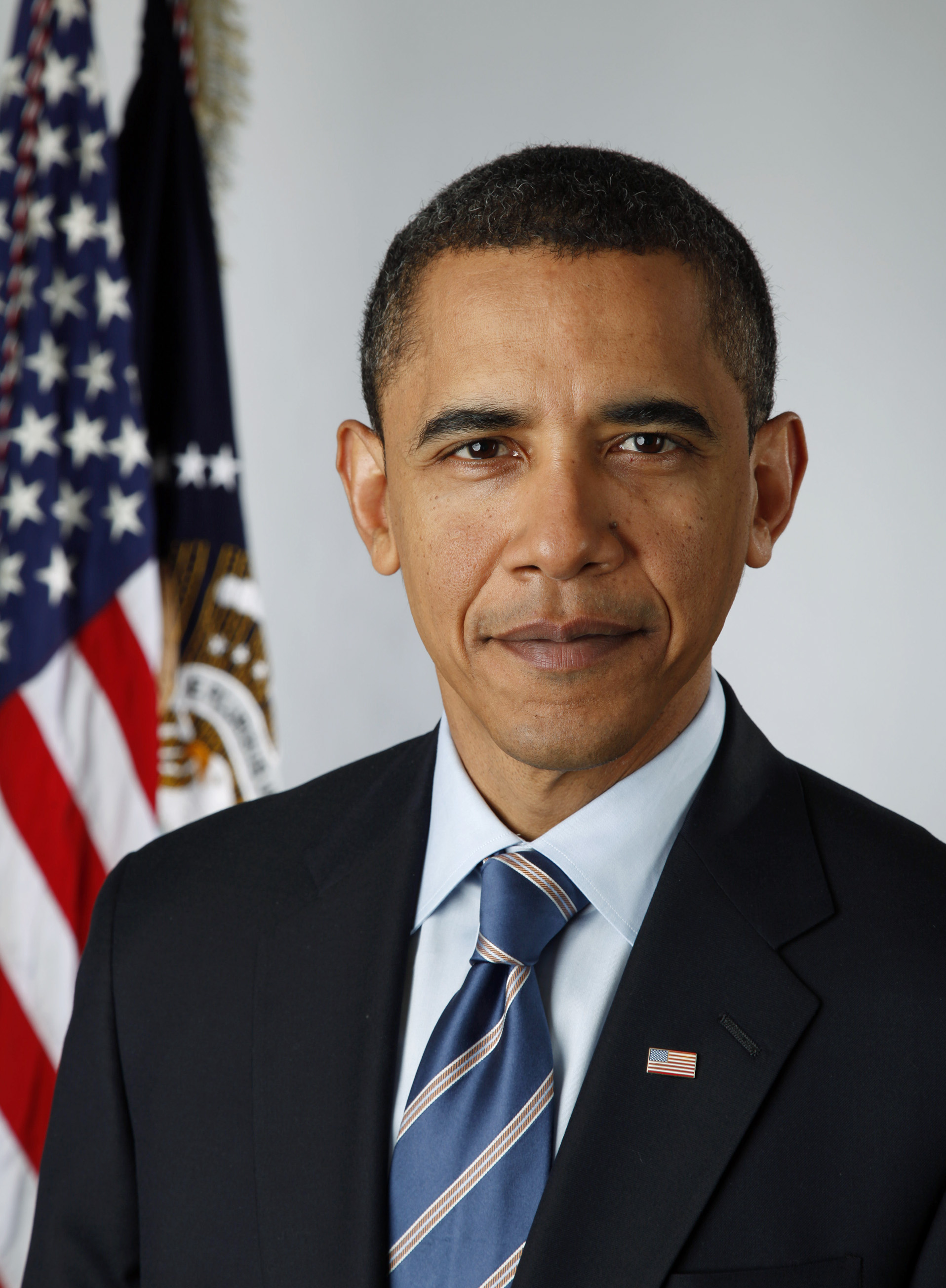
obama official photoThe crazies are out again, urging parents: “No school for kids on September 8th due to the beginning of Socialist Indoctrination of Americas children. Keep your kids home September 8th.”
Continue reading →

Leave a comment

Filed under news

State Fair Seed Art 2009

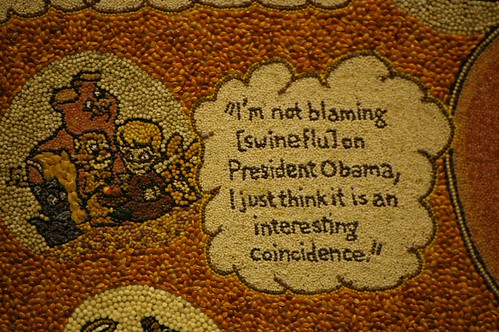
Seed art is a long tradition at the Minnesota State Fair. This year’s crop includes some pointed, political entries.

AnnaConda - Snakewoman

AnnaConda - Snakewoman

GOP Sideshow – AnnaConda, Snakewoman

GOP Sideshow – World’s biggest ego, world’s thinnest skin

Madame Michelles Zany Predictions

Madame Michelle's Zany Predictilns

GOP Sideshow – Madame Michelle’s Zany Predictions

Michele Bachmann, Patron Saint of Wingnuts

Michele Bachmann, Patron Saint of Wingnuts

Michele Bachmann, Patron Saint of Wingnuts

Obama Birth Certificate

Obama Birth Certificate

Obama Birth Certificate – Birthers, Move On!

Micheles Precious Moments

Michele's Precious Moments

Michelle’s Precious Moments

Precious Moments Close-Up

Precious Moments Close-Up

Precious Moments Close-up

“I’m not blaming [swine flu] on President Obama. I just think it’s an interesting coincidence.” Michele Bachmann

(I see gay people from the bushes.)

“[T]he science indicates … that nature is the cause [of global warming], with solar flares, etc. ”

“The global hoax … [is] all voodo, nonsense hokum, a hoax.”

“I’m a foreign correspondent behind enemy lines. ”

“The Lord said, Be submissive to your husband. ”

“[T]ake a good look at the views of the people in Congress and find out, are they pro-American or anti-American? ”

1 Comment

Filed under Uncategorized

News Day: On hiatus

Due to Drupal 6 migration issues at TC Daily Planet, News Day is on hiatus for at least the next few days. News Day is my “spare time” blog, and between the Drupal 6 issues at work and some family medical issues (not serious, but time-consuming), I do not have time to post right now. Expect to see the blog resume before week’s end!

Leave a comment

Filed under Uncategorized

NEWS DAY: Metro Gang Strike Force hearing / New LRT station in St. Paul / State Fair opens today

Metro Gang Strike Force: Abuse, theft, racismmgsf_logo Legislators heard testimony on criminal activity by some Metro Gang Strike Force officers yesterday, with investigators describing a pattern of abuse of citizen rights, unjustified seizure of property, and taking seized property for private use. The investigative reports and testimony described a pattern of seizure of cash from anyone carrying large amounts of money when stopped by MGSF officers and noted that “these encounters almost always involved a person of color.”

Even with the testimony offered, Ruben Rosario writes, the committee did not hear about some of the more troubling aspects of MGSF behavior: the pursuit of immigrants with no gang or criminal ties, just because of their brown skin. MGSF instructed Minneapolis impound lot employees to call them when “Mexicans” came to claim their cars, and 29-year-old Dagoberto Rodriguez-Cardona was among their victims. The MGSF cops came to the impound lot on July 31, 2008, searched and questioned the two “Mexican” families there, seized more than $4,000 from Rodriguez-Cardona, and searched the cars of the two families:

No drugs were found.

None of those bagged that night had gang ties. Rodriguez-Cardona had no arrests, not even a parking ticket. Other than an acknowledgment that a little more than $4,000 was seized, Luger’s report found minimal information on the encounter in strike force records. No crime was alleged or prosecuted against those arrested and held in custody that night.

Yet, police contacted federal immigration officials in violation of a Minneapolis ordinance that prohibits officers from doing so unless a crime has been committed.

Now Rodriguez-Cardona faces deportation, and is suing to get his money back, showing what his attorney calls “raw courage” in coming forward.

The legislators heard from investigators yesterday. They heard about seizure of a wood chipper and stump grinder, and wondered how these could possibly have been thought to be involved in gang activity. They heard about seizures of flat screen TVs and sloppy accounting methods, and the need to change state seizure laws — never mind that many of the seizures seemed to be in blatant disregard of existing laws. The testimony that they did hear was damning, but they did not hear from victims. Rosario writes:

But the one thing lacking in Wednesday’s legislative hearing was testimony of someone like Rodriguez-Cardona. He would have driven home the human experience of someone placed in handcuffs in front of a sobbing relative and stripped of money earned by the sweat of his brow. Throw in the fact that his alleged muggers were officers of the law.

For additional accounts of yesterday’s hearing, see Metro Gang Strike Force: “Bad actions overshadow the good actions” in the TC Daily Planet, Metro Gang Strike Force hearing: Plenty of blame, but no answers in the Pioneer Press, Forfeiture law questioned after gang force misuse in the Star Tribune.

Big win for Central Corridor communities? The City of St. Paul will pay for an LRT station between Snelling and Rice Street under a tentative agreement reached Wednesday, reports the Pioneer Press:

St. Paul will put up $5.2 million for a new station — probably at the intersection of Western, Victoria or Hamline, according to a vote by the Central Corridor Management Committee.

In exchange, the Metropolitan Council will purchase an $8 million downtown property at East Fourth and Cedar streets, which would allow trains to make an easier turn. A prior agreement required St. Paul to foot the bill. …

The vote also prioritized the construction of two more east metro stations using money from a capital reserve built into the project — provided all goes well.

That’s huge for the community about to be disrupted by Central Corridor construction, as previous plans called for the trains to zoom along with stops a mile or more apart in low-income areas along the eastern part of the University Avenue line, though stops are closer together in other areas. However, the change still offers little to University Avenue small businesses. MPR reports:

A group of business owners met today to discuss their ongoing concerns. They say their voices aren’t being heard.

Lysa Bui, who owns the Saigon restaurant, says her business and many others won’t be able to survive the four-year construction project.

Central Corridor spokesperson Laura Baenen responded to business concerns by saying, “There’s absolutely no money in the project budget for handouts,” but she said that limited funds are available for “mitigation,” such as signage to tell customers where to look for parking, and free business consulting to offer advice to business owners.

State Fair opens today! What more can you say? Lots, actually, but I’m out of time this morning. So get your State Fair news here and here and most of all at the official source, right here

Leave a comment

Filed under news