#Orlando — What can we say?

More love, less hate

After the hatred, after the massacre, what can we say? No words can make anything better. And yet we speak, because we are human, because we use words to connect with one another and to express our grief, our outrage, our solidarity. So — some words gleaned from my Facebook and morning news: Continue reading

Leave a comment

Filed under gender, human rights, race, religion

Turning points for hope: Ferguson and Stanford

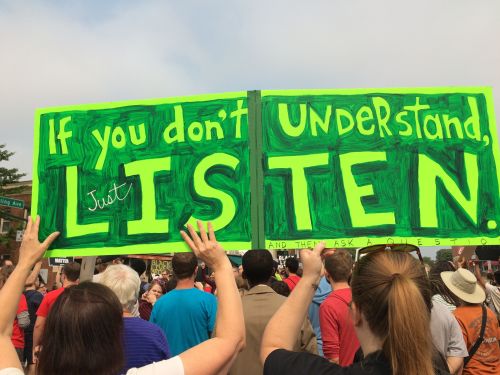
Listen

In 2014, the police shooting of Michael Brown brought young people pouring into the streets. Their anger, their courage, their commitment quickly flowed beyond Ferguson and police to challenge multiple forms of institutionalized and structural racism of this country. A new generation marched into the streets. Rage and grief sparked their activism, conviction and solidarity sustain them.

On June 2, Judge Aaron Persky gave Brock Turner, the Stanford rapist a slap-on-the-wrist sentence of six months in jail, which means he’ll probably serve three. An eloquent 12-page statement from the Stanford rape victim sparked outpourings of anger and support. Rather than marches in the street, protest took the form of women telling their own stories of sexual assault, of a million-signature judicial impeachment petition, of at least 10 prospective jurors refusing to serve under Judge Persky in other cases, and of statements of solidarity including an open letter from Vice President Joe Biden. Continue reading

Leave a comment

Filed under gender, human rights, race

Changing the world for good: Minnesota’s Advocates for Human Rights

Screen Shot 2016-06-05 at 9.37.27 AM

As bad as every day’s news looks, Christof Heyns says, the world is actually getting less violent. He should know. Serving as the UN Special Rapporteur on extrajudicial, summary or arbitrary executions since 2010, Heyns has spent years looking at the worst of what the world has to offer. But, he says, over four centuries, the percentage of people dying because of violence has declined. “Our standards and awareness are increasing,” he said, but the world is getting less violent.

Heyns spoke at the annual awards dinner of the Advocates for Human Rights on June 1. The work of The Advocates is part of the reason that the world is getting less violent. Continue reading

Leave a comment

Filed under human rights, immigration

Whispers and shadows and Mental Health First Aid

Screen Shot 2016-05-31 at 1.09.09 PM

Chirlane McCray, first lady of New York City, said her parents’ depression was “talked about in whispers and shadows.” Now she’s talking out loud about mental health, trying to bring it out of the shadows. Hiding or ignoring mental health issues hurts all of us. Everyone has a family member, friend, or co-worker who is affected. One in four people in this country suffers from some mental illness or addiction each year. Suicide is the tenth leading cause of death in the United States, taking at least 41,149 lives in 2013. Minnesota’s suicide rate has risen sharply since 2014. Continue reading

Leave a comment

Filed under health care, police and crime

Dr. Edwige Mubonzi: Taking a stand for women and girls

Dr Edwidge Mbonzi

Dr. Edwige Mubonzi. Photograph courtesy of Dr. Mubonzi.

Death threats drove Dr. Edwige Mubonzi from her home and work in the Democratic Republic of Congo about two and a half years ago. Her work – surgically repairing the physical damage of rapes – brought the death threats. Rape as a weapon of war, in the ongoing struggle for control of the country’s rich mineral resources, has made DR Congo the rape capital of the world. Continue reading

3 Comments

Filed under human rights

No way out: For poor defendants, fines and fees are forever

Screen Shot 2016-05-29 at 4.11.25 PM

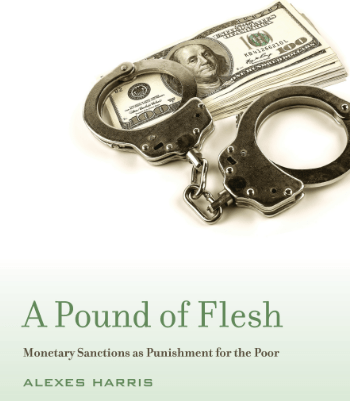
“Poor people convicted today face fiscal servitude to the court,” writes sociologist Alexes Harris in A Pound of Flesh, an important and highly readable book about the U.S. criminal justice system that will be published in June. Her research reveals how a complex system of fees and fines creates “a two-tiered system of punishment: one for those with financial means and one for those who are poor.” Legal financial obligations (LFOs) imposed in criminal cases include fines and restitution, but also fees for everything from court libraries and trial by jury to room and board while imprisoned. Besides the original amounts, interest on unpaid LFOs keeps piling up, sometimes along with annual collection fees on the unpaid balance. Continue reading

Leave a comment

Filed under prisons, race

Quack grass, thistles and the Minnesota legislature

7258615016_6ffe86c4d0_z

Photo by Miheco, published under Creative Commons license.


As I dug out weeds in the garden this morning, my thoughts turned to the just-ending legislative session. A bold, bright-eyed robin supervises as I dig out thistles and quack grass, pull creeping Charlie, and leave the milkweed for the butterflies.

Weeding is not my favorite part of gardening, but it’s essential. If I don’t keep at it, the thistles and quack grass will take over and choke out everything else. Still, pulling weeds is pointless, unless you also plant. Continue reading

1 Comment

Filed under children, education, news

What is education for?

US Dept Education reading

Photo courtesy of U.S. Department of Education, published under Creative Commons license.


Is preparing students for minimum wage labor the goal of public education? That’s what New York State argued in Campaign for Fiscal Equity (CFE) v. State of New York. The case dragged on from 1993 to 2006, with the New York appellate court eventually ruling that students deserve more than minimum education for minimum wage jobs. Last week, the Boston Review published a forum on the purpose of education, beginning with this case. While it doesn’t focus on the nuts-and-bolts arguments so often raised in debates over testing, educational equity and “reform,” the forum illuminates those issues as well.  Continue reading

Leave a comment

Filed under education, Uncategorized

God help the refugees. God help us all.

Dadaab Oxfam

2012: Fatuma Sankos arrived in Dadaab two months ago with her two small sons – Abass Hassan and Mohamed Hassan. She lives in a tiny shelter made from sticks, cardboard and plastic bags. She has not yet been formally registered in the camp so is not able to get food rations and depends on other refugees for food, and aid agencies for water. Photo: Jo Harrison/Oxfam, published under Creative Commons license

Kenya announced last week that it will close all of its refugee camps, forcing more than 600,000 refugees to return to the violence they fled in their home countries of Somalia, Sudan, Ethiopia and other nearby countries. That’s terrible, but the United States is in no position to criticize Kenya. In secret memos uncovered last week, the United States Immigration and Customs Enforcement (ICE) ordered a 30-day “surge” of arrests of immigrant mothers and children to return them to the violence they fled in their home countries of El Salvador, Honduras and Guatemala. Continue reading

1 Comment

Filed under children, human rights, immigration, Latin America

Stop feeding the kids

6282545159_cf310ba66d_z

Photo by USDA, published under Creative Commons License. (20111025-FNS-RBN-School Lunch)

Six years ago Congress did something right. They said that high-poverty schools could skip the individual child-by-child means testing and just feed all the kids free breakfast and lunch. That saved hundreds of thousands of dollars previously spent on processing eligibility forms, as well as thousands of hours of teacher and parent time. More importantly, when everybody can eat for free, nobody has to feel singled out as “that poor kid getting a free lunch.” Free, in-school breakfasts increase the number of kids starting the day ready to learn. Now that the program is succeeding, Republicans in Congress want to roll it back.

Continue reading

Leave a comment

Filed under children, education, food and farming