
Bertha Oliva: Death squads are back in Honduras

disappeared.jpg_1633646206

A wall displaying victims of forced disappearance in the office of COFADEH. (Photo: COFADEH via TeleSUR at http://www.telesurtv.net/english/contenidos/2015/05/22/noticia_0027.html)

I remember meeting Bertha Oliva in Tegucigalpa in the late 1980s, the wall outside her small office tagged with graffiti death threats, gunshots in the night bringing an unnatural stillness to the city center, silencing even the dogs and roosters. Decades of human rights defense later, Bertha Oliva told Congress last week that death squads are back in Honduras. Death squads, like the one that kidnapped her husband back in the 1980s. Death squads, like the ones that threatened her and the Committee for the Relatives of the Disappeared throughout the 1980s and into the 1990s. Continue reading →
Leave a comment

Filed under human rights, Latin America

#JusticeforJamar: What’s wrong with the mainstream story, where to find critical analysis and information


IMG_0163.JPG

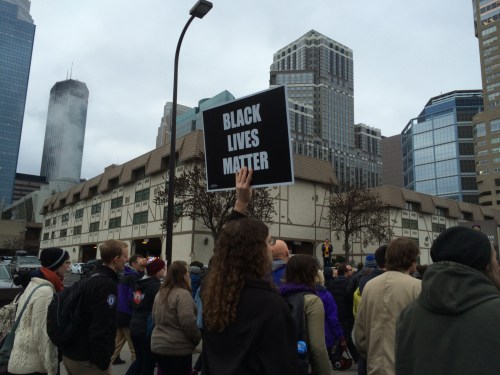
Protest rally after Freeman decision not to charge cops.

Hennepin County Attorney Mike Freeman delivered the official story on March 30, along with piles of documents and videos available on his website. According to the official story, a complete investigation resulted in no charges because it’s tough to charge a police officer with anything and there just wasn’t enough evidence. Several people have poked giant holes in Freeman’s presentation, including his misstatements of evidence, his dismissing the importance of eyewitness testimony, his over-statement of the reliability and meaning of forensic evidence, and his use of language and rhetoric that dehumanized and denigrated Jamar Clark. Continue reading →

Leave a comment

Filed under human rights, police and crime, race

What’s wrong with TPP — what you can do NOW to stop it


12194372303_6c4954d0cc_z

Photo by Wendy Colucci of the CNY Area Labor Federation, AFL-CIO, republished under Creative Commons license.

The United States signed the Trans-Pacific Partnership (TPP) trade agreement in February, but there’s still time to stop the deal that some are calling “NAFTA on steroids” before it becomes law. Signing is only one step: the next step is passage by Congress. In this election year, you can contact your U.S. Senators and Representatives to say a resounding NO to TPP. Here are four reasons to stop TPP, and links to contact information for Congress. Continue reading →

1 Comment

Filed under agriculture, environment, food and farming, work

More on Glendale in Minnesota Spokesman-Recorder

Screen Shot 2016-03-24 at 11.55.54 AM.pngThe Minnesota Spokesman-Recorder asked me to report on the situation in Glendale Townhomes, the oldest public housing in Minnesota. That article — Mpls Public Housing residents fight redevelopment plan — is now published. In it, I present facts and opinions of the people directly involved in the process. I also have blogged extensively about the current dispute between Glendale residents and the Minneapolis Public Housing Authority, and have been generally critical of the redevelopment option that MPHA initially proposed almost a year ago. You can find the blog posts here.  Continue reading →
Leave a comment

Filed under housing

Stopping private prison profiteering in Minnesota

Reverend Armstrong

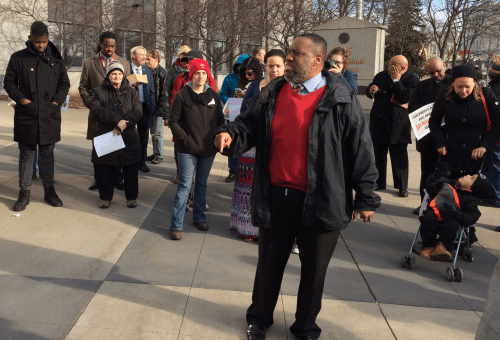
Reverend Ovester Armstrong, Jr. speaks to #StopCCA rally

“They are not building these prisons to stay empty,” Reverend Ovester Armstrong, Jr. told protesters at the Minnesota State Office Building on March 22. “They are building these prisons to fill them up.” Inside, the House Public Safety Committee held hearings on re-opening a private prison in Appleton. The private prison is owned by the Correctional Corporation of America (CCA), the largest prison company in the United States.

“We should help people, not make money off of them,” said Reverend Armstrong. “We should not let someone’s life be held hostage to a dollar bill.” Continue reading →

Leave a comment

Filed under prisons, race

What’s wrong with GMOs?

IMG_5733What’s wrong with GMOs (genetically modified organisms) in food production? While many GMO critics say they pose health hazards, I find that argument unconvincing. Instead, I am concerned about:

  1. the tie between GMO crops and overuse of pesticides and fertilizer, each of which has serious environmental consequences;
  2. the contribution of seed companies and GMOs to the increasing industrialization of agriculture, which I believe harms the land, farmers and consumers;
  3. GMO genetic drift, which contributes to contamination of crops of neighboring farmers and, even more seriously, may contribute to the development of superweeds.

I support GMO labeling for the same reason that I support other labeling, such as country of origin labeling for meat and vegetables or rBGH labeling for dairy products. I think more information is a positive good, and that consumers should be allowed to make their own choices. For example, while I see no human health hazards in drinking milk produced by cows treated with rBGH, I see very high health hazards to the cows — and a detriment to dairy farming in general. For those reasons, I choose not to buy dairy products unless they are rBGH-free, and I support labeling because it gives me an option to choose. Continue reading →

4 Comments

Filed under agriculture, environment, food and farming

EPA approves another superchemical for superweeds


In October 2014 the U.S. Environmental Protection Agency approved the registration of Enlist Duo, a new herbicide to fight superweeds resistant to other weedkillers. The chemical combines glyphosate, originally developed and marketed by Monsanto as Roundup, with the older, more toxic 2,4-D, one of the ingredients in Agent Orange. The approval applies to six states, and the EPA is accepting public comment until Dec. 15 to register the pesticide in 10 additional states. The registration, which came a month after the U.S. Department of Agriculture approved new corn and soybean seeds genetically engineered to resist both herbicides, is subject to a six-year limit and some monitoring requirements. Continue reading →

Leave a comment

Filed under agriculture, environment, food and farming

Three-year-olds, immigration law, and the presidential candidates

IMG_6026

David Wilson and Jane Guskin explain what’s wrong with the mainstream immigration debate, including the Sanders/Clinton pseudo-discussion in their March 9 debate:

“The media and the politicians treat the migration either as a natural disaster (‘flooding over the border’) or as a second-rate science fiction movie (‘the aliens are invading’) — with either scenario seen as deserving an aggressive response.

“But in the real world, the asylum seekers and other migrants that some call ‘illegals’ are human beings pushed from their homes by economic dislocation or fear of violence, often risking their lives for a chance at a brighter future.  And U.S. foreign and economic policies are intimately linked to these ‘push factors.'”

Continue reading →

1 Comment

Filed under children, human rights, immigration

As France clears “the jungle,” refugees flee to even worse camps

23057802623_c905049cfb_z

White board from an English classroom, before Calais camp was dismantled. Photo by EngageJoe, published under Creative Commons license.

French authorities cleared a Calais refugee camp called “the jungle” this week — and the refugees displaced from the squalid camp scattered to set up even less secure camps nearby. But what did the French government expect? The refugees in Calais have nowhere to go, and burning down their tents and shacks does not magically create alternatives, but rather increases their misery. Continue reading →

1 Comment

Filed under children, immigration

As borders close, refugee crisis in Europe escalates

refugees in Samos

Photo of refugees in Samos by JTStewart, published under Creative Commons license

This week, the already-terrible refugee crisis in Europe got worse, as Turkey and the E.U. reached an agreement that severely restricts refugee movement, and Balkan nations closed borders, leaving refugees stranded in makeshift camps. Continue reading →

Leave a comment

Filed under immigration