
 In the Minnesota special session, the legislature will decide on school funding (including teacher lay-offs and pre-K classes), water quality (including totally deregulating mining pollution and de-funding other anti-pollution measures), and whether to allow seed companies to tell lies on labels, among other issues. Anything there that interests you? If so, read on for a quick-and-easy guide to how the special session works, with more detailed articles linked at the end. Continue reading
Category Archives: environment
Four things you need to know about Minnesota’s special session
Filed under agriculture, education, environment, food and farming
Buffer zones, bees, and turkeys in the special session

Photo by Bob Peterson. Published under Creative Commons license.
What’s wrong with the agriculture, environment and natural resources bill? It’s hard to know where to begin. Partly, the problem is the bill is too damn big. Along with the budget items, (mostly) Republican legislators threw in a pile of bad laws that they thought they could get through at the last minute. They figured, wrongly as it turned out, that Governor Dayton would focus only on the education bill and would let them get away with murder in environmental rollbacks. They were wrong.
Filed under environment, food and farming
Three reasons Dayton should veto the environmental bill
 The Republican-deformed agriculture and environment budget bill attacks Minnesota waters, bees, and the MPCA citizen board. And that’s just the beginning of a long list of problems with the bill. Continue reading
Filed under agriculture, environment
Friday catch-up: Explosive trains, polluted wells, sign rebellion
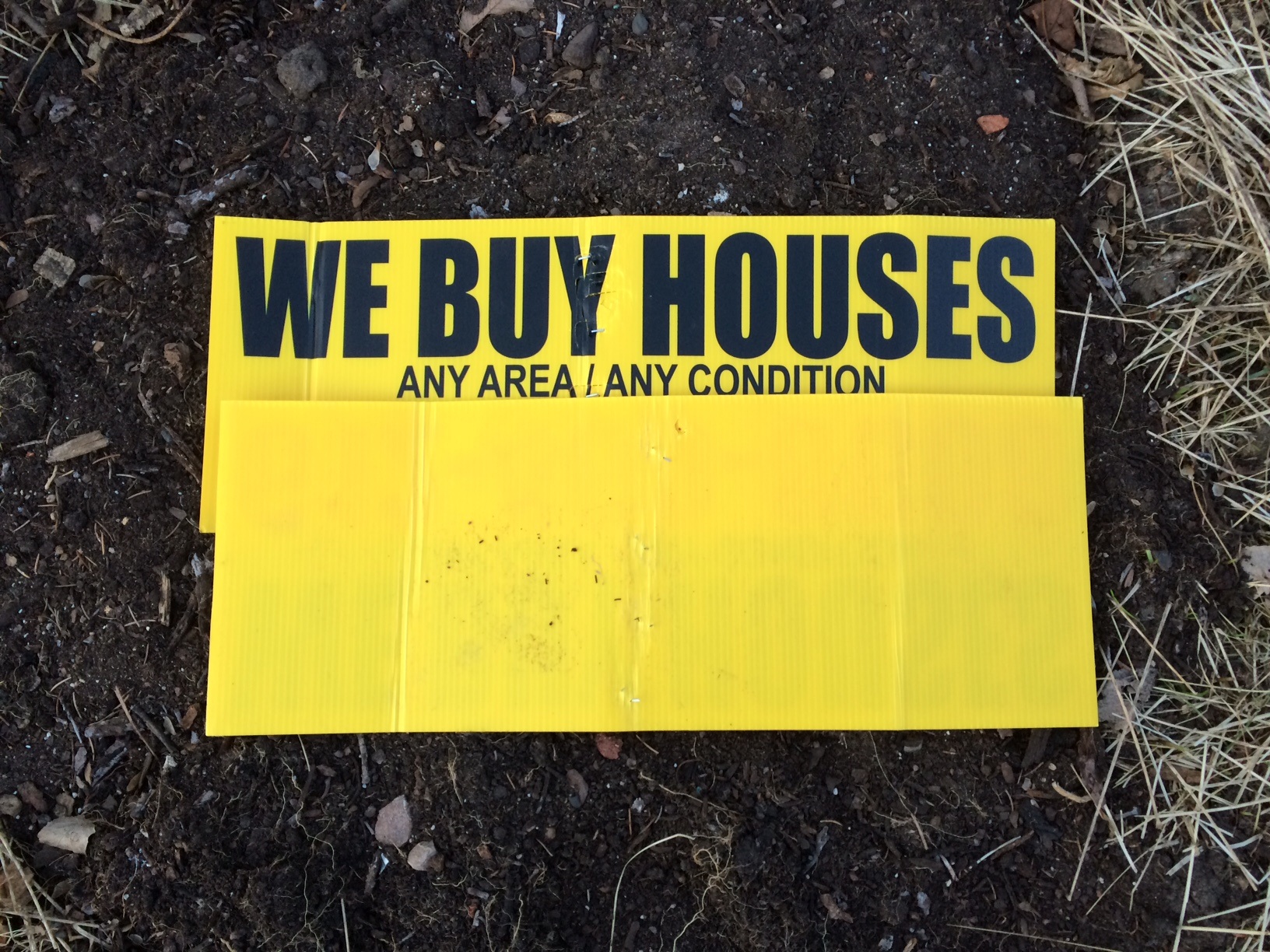 Hat tip to Alan Muller for linking to a scary train story: The Omaha World-Herald reports that the Union Pacific Railroad has applied for a permit to haul liquefied natural gas (LNG), which would make it the first railroad to haul this highly combustible product. The proceedings before the Federal Railroad Administration are still secret, but somebody leaked the news. While Union Pacific is headquartered in Omaha, its 435 miles of Minnesota track run through the Twin Cities, as well as Worthington, Albert Lea, Northfield and other southern Minnesota cities. Continue reading
Filed under environment
Ice out — watch the water

The ice is out across Minnesota, and rivers run higher with snowmelt. Temps are rising, green life poking up out of the dirt, and I saw a bright yellow crocus today. But beneath the softening soil, and beneath the surface of Minnesota’s lakes and rivers, all is not well. Continue reading
Filed under environment
This land is your land, and this river is your river
I grew up on the Crow River. I remember walking with Grandpa on the cow paths worn along the hillside above the river, and measuring flood or drought against the big rock at the end of the island. We found wild strawberries on those hillsides, and picked prickly gooseberries later in the summer. Mending pasture fences, I watched the bluebirds nest each year in an old, gray wooden fencepost.
In 1976, our Meeker County part of the Crow River was added to Minnesota’s Wild and Scenic Rivers list, along with parts of the Mississippi, Kettle, Rum, Minnesota and Cannon rivers. Now an oil pipeline crosses the wild and scenic Crow River, and this year the pipeline company proposes to double the amount of oil that the pipeline carries. Continue reading
Filed under environment
Oil trains in the Twin Cities: The fire next time

Photo of BNSF oil train by Joshua Putnam, published under Creative Commons license.
Last week’s news brought more oil train derailments and explosions. Not here, not yet, but it’s just a matter of time. The Department of Transportation predicted last July that we’ll see an average of 10 derailments a year of crude oil and ethanol-carrying trains, with $4.5 billion in damages over the next two decades — if we’re lucky. If we’re unlucky, one of those derailments could come in a major metropolitan area, with a death toll of up to 200 people and single-incident damages of $6 billion. Concern over oil train safety is driving a series of Twin Cities community meetings on the oil trains running through our community right now. Tonight — Tuesday, March 24 — Representatives Raymond Dehn, Mike Frieberg and Frank Hornstein and Senator Bobby Joe Champion will hold a town meeting at the Theodore Wirth Chalet (1301 Theodore Wirth Parkway) from 6-7:30 p.m.
The federal Department of Transportation predictions are based on increased safety from newer, safer tanker cars — but the derailment and explosion near Galena, Illinois this month involved “safer” tanker cars. They split open and burned for days. The Star Tribune reported:
“But 1232 standard cars [the newer, “safer” model] have split open in three other accidents in the past year, including one in West Virginia last month. That train was carrying 3 million gallons of North Dakota crude when it derailed, shooting fireballs into the sky, leaking oil into a waterway and burning down a house. The home’s owner was treated for smoke inhalation, but no one else was injured.”
A February derailment and fire in West Virginia also involved the “newer, safer” railroad cars. NPR reported:
“Last night brought more fireballs shooting up from the crude oil spilled when a group of tanker cars derailed. The train wreck occurred along the Kanawha River in West Virginia. Hundreds of residents have been evacuated from their homes. Investigators have not yet determined what caused the derailment, but it and other ones like it are raising concerns about newer tank cars that were believed to be safer than older models. … the tank cars that went up in flames Monday in West Virginia are not the much-maligned DOT-111s, the type of tank cars that exploded in the town of Lac Megantic, Quebec, in 2013 killing 47 people. Now the tank cars in Monday’s fiery derailment are CPC 1232s, a type that is designed to be much stronger.”
According to Associated Press, the DOT report found that
“about 16 million Americans live within a half-kilometer of one of the lines. Such proximity is equivalent to the zone of destruction left by a July 2013 oil train explosion that killed 47 people and leveled much of downtown Lac-Megantic, Quebec, the analysis said.”
Governor Mark Dayton is pushing for improved rail safety and asking the feds for a full environmental study of a track that could send “high hazard” trains through Minneapolis and the northern suburbs.
Besides the danger of explosions in cities, train derailments and spills affect waterways all along their routes. A March 7 derailment in rural Ontario (one of three in a month) spilled oil into local rivers, as well as triggering a warning to local residents to stay indoors to avoid smoke inhalation from the fire.
The Washington Post reported that oil train derailments and explosions “shattered all records” last year.
For more background, see my previous posts:
- Five reasons to worry about oil trains in the Twin Cities (4/25/2014)
- Unnatural disasters: Would you rather have an oil spill or an explosion? (3/29/2014)
For continuing updates on MN oil train issues, follow Sally Jo Sorensen’s series on investments by North Dakota energy interests (and those who transport their products) in Minnesota politics:
- Merchants of Daudt I: flipping the MN house on the rising plume of North Dakota oil money (March 8)
- Merchants of Daudt II: an oil train of cash (March 13)
CORRECTION: It’s Senator (not Representative) Bobby Joe Champion.
Also – great Q&A from city of Crystal here.
Filed under environment
Minnesota’s endangered state butterfly: Millions of Monarchs gone

Monarch photo from http://www.dnr.state.mn.us/insects/monarchbutterfly.html
Minnesota’s state butterfly, the dazzling orange-and-black Monarch, is a treasure that we share with the world during its multi-generation migration between Minnesota and Mexico. Now, the U.S. Fish and Wildlife Service warns that, “Unless we act now to help the Monarch, this amazing animal could disappear in our lifetime.” According to the Washington Post, “what’s happening to monarch butterflies is nothing short of a massacre.” The Center for Biological Diversity is petitioning for endangered species protection for the monarch, citing a 90 percent decline in the population over the past 20 years. Continue reading
Filed under environment, food and farming
Under the radar—biomass, Xcel and Rock-Tenn in the legislature
Biomass fuels, energy efficiency, and public money are on the line in the legislature, with a decision on the shape of Rock-Tenn’s replacement fuel plant. A House-Senate conference committee will decide whether to accede to Xcel Energy’s demand for limits on public energy use. It will also determine whether and how the community can have a voice in the process. A community advisory council, promised in a memorandum of understanding between Rock-Tenn and the Minnesota Pollution Control Agency last October, has yet to be created.
| Rock-Tenn When the High Bridge power plant stops burning coal in June, the Rock-Tenn recycling plant in St. Paul will lose its energy source. That poses major concerns for a wide variety of stakeholders throughout the metro area and beyond. Concerns focus on the sources of energy that will replace the coal-generated steam of Xcel’s High Bridge plant.The Rock-Tenn plant, which began as family-owned Waldorf Paper in 1908 and was bought by Rock-Tenn corporation in 1997, processes half of all paper recycled in Minnesota, about one thousand tons daily. Rock-Tenn is an international recycling and manufacturing firm, with about 10,000 employees in plants in the United States, Canada, Mexico and Chile. In St. Paul, Rock-Tenn employs about 500 people, at an average salary of $60,000, according to senior executive Jack Greenshields, and spends about $75 million annually on goods and services.Previous stories in this series: Re-fueling Rock Tenn: environmental and economic challenges Who’s on First? Keeping track of the players Following the money: who pays and who profits |
The Rock-Tenn plant, located in St. Paul at Cretin Avenue and I-94, will convert from steam produced by burning coal to a biomass-fueled plant. All the players agree that Rock-Tenn is a community asset, employing about 500 people and recycling half of Minnesota’s paper. Beyond that bottom line, serious disagreements center on the type of fuel to be used and on community pressure for involvement in the decision-making process.
Xcel: no competition allowed
Xcel Energy requested legislation to prevent competition from a non-profit or publicly-owned energy plant at Rock-Tenn, and that provision became part of the Senate bill. Early discussions of a new Rock-Tenn power plant included possible operation of the plant by St. Paul District Energy and possible excess steam and energy capacity that could be used for district heating and cooling in the Midway area. The model would be the highly successful, non-profit District Energy operation that provides heating and cooling in downtown St. Paul.
According to Xcel lobbyist Rick Evans, the Senate bill (SF 2096) as it is now written “would prevent District Energy from setting up a district heating and cooling district in the Midway area.”
Senator Ellen Anderson (D-St. Paul), co-chair of the conference committee, insists that nothing in the bill is final, and that “district energy is still under negotiation.”
Community concerns and input
Rock-Tenn’s original plan, strongly supported by the city of St. Paul and the St. Paul Port Authority, called for using refuse-derived fuel (RDF), which many community members oppose as “burning garbage.” Early proposals for a legislative ban on RDF did not make it into the omnibus environment, energy and natural resources bills now in conference committee.
Proposals to give district councils the power to approve or reject plans for the new power plant foundered on strenuous objections from the city of St. Paul. Current language mandates considerably less community involvement, beginning with two “public meetings” before August 1. The bill also says the city council “must take into consideration” district council resolutions from the affected districts. The St. Paul Port Authority would be required to make informational presentations to community meetings, but not until after the planning and the environmental impact statement have been completed.
The environment, energy and natural resources conference committee is chaired by Senator Ellen Anderson and Representative Jean Wagenius (D-Minneapolis).
Filed under environment

 Mary Turck