NEWS DAY | Flu, vaccine, and MN pigs / Mortgage foreclosures dead ahead / War Reports

<a href=Flu, vaccine, and MN pigs “Unprecedented levels” of flu were reported by the federal Centers for Disease Control (CDC) last week, saying that “the amount of influenza and pneumonia mortality is above the epidemic threshold.” The CDC and others say that more swine flu vaccine will be available by the end of the month, and express concern about resistance to getting vaccinated. According to NPR, about one third of people who don’t want vaccination are worried about side effects, 28 percent say they don’t think they are at risk, and 25 percent say they can get medication and treatment if they do get the flu. Not necessarily, says Arthur Kellermann, an emergency medicine physician at the Emory University School of Medicine who has treated swine flu cases: Continue reading →

Leave a comment

Filed under news

NEWS DAY | More Michele, more of the time / What do MN unemployment numbers mean? / MN’s looming health care disaster

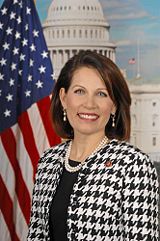
Michele BachmannMore Michele, more of the time With a feature story in the New York Times, talk show appearances, and continuing 24/7 coverage by local media, Michele Bachmann is riding high. This week’s crop includes reports that Bachmann has one of the worst show-up-for-voting records in the House of Representatives, that she has $600,000 in her campaign fund, that opposing candidates are “tip-toeing” around health care issues, that she’s talking to Glenn Beck (again), that she’s calling for the firing of Kevin Jennings, and that she has appeared on Glenn Beck’s show three times in September and three times in the first two weeks of October.

Any Michele Bachmann story guarantees a bump in readership numbers, both from those on the right who love her and those on the left who hate her, but can’t pass up one more Michele story. Michele stories drive ratings, and that means the stories will just keep coming.

What do MN unemployment numbers mean? Minnesota’s unemployment rate dropped by 0.7 percent to 7.3 percent in September, but the state also lost 7,900 jobs. How does that work?

The biggest part of the explanation is that MN unemployment figures do not include people who have given up looking for work. The MN Department of Employment and Economic Development (DEED) offered one explanation:

About 15,000 more Minnesotans were employed in September, but there were nearly 19,000 fewer who were unemployed. That means that 4,000 people left the labor force, reducing the state’s labor force participation rate to 72.3 percent last month. The labor force participation rate is the percentage of working-age people in Minnesota who are employed, or unemployed and looking for a job.

State economist Tom Stinson, quoted in the Star Tribune, cautioned that the 7.3 percent figure might be an anomaly, and cautioned:

“This is a big change, and the concern is that anytime you have a big change in a number that comes from a relatively small survey, it may just be a problem with the sample,” Stinson said. A similarly low number next month would confirm the unemployment rate has fallen this far, he added.

And in a continuation of the good news/bad news theme, MPR notes that lower unemployment numbers will mean more unemployed workers losing unemployment compensation benefits:

While the declining unemployment rate is an encouraging sign, it also means thousands of the state’s unemployed will be eligible for fewer weeks of benefits.

McElroy said the U.S. Department of Labor is expected to certify the new numbers next week, which would reduce the maximum number of weeks of unemployment benefits from 79 to 72 weeks. Up to an estimated 7,000 people could be affected by the change, 4,200 of them starting Nov. 14.

Minnesota’s looming healthcare disaster With General Assistance Medical Care (GAMC) ending on March 1, by the governor’s decree, about 35,000 Minnesotans will be left without health care coverage. Casey Selix details the impact in MinnPost today, ranging from the financial wallop to hospitals to loss of desperately-needed prescription medications for individuals.

Program funds may run out even sooner, some time in February, reports MPR:

“Right now, we’re seeing that more and more people are needing health coverage under the program so the money is going faster than we thought it would,” said Michael Scandrett, director of the Minnesota Safety Net Coalition, a group is made up of dozens of hospitals, clinics, and other health providers. “It looks now like it could be some time in February when people could lose their coverage”

GAMC covers individuals making less than 75 percent of federal poverty guidelines, which would be about $8,000 for a single adult. Many make far less than that. Some 28 percent are homeless. Just over 60 percent have mental health and/or chemical dependency diagnoses.

The impact will go far beyond the people who lose GAMC coverage and their doctors, especially in Hennepin County, home to 41 percent of GAMC enrollees, and Ramsey County, home to 12.6 percent.  Monica Nilsson, director of street outreach for St. Stephen’s Human Services in Minneapolis, told MinnPost that downtown businesses will also see the effects:

“They’re always complaining about panhandling and people causing disturbances,” Nilsson said, “and I’ve been saying that if you think we have an economic development issue now, just wait until our folks can’t get their anti-psychotic meds. There will be a lot more people talking to themselves” on March 1.

While Pawlenty has said that GAMC recipients should enroll in MinnesotaCare, advocates say that’s no answer. MinnesotaCare charges both premiums and co-pays, and the people receiving GAMC have no money for either.

Meanwhile, costs for another Minnesota health care program are skyrocketing. Politics in Minnesota examines the state’s high-risk insurance pool – a nonprofit called the Minnesota Comprehensive Health Association (MCHA). While enrollment is holding steady at about 28,000, costs are increasing and MCHA’s funding base is eroding.

1 Comment

Filed under news

NEWS DAY | Crunching math scores / Wilder cutting jobs, programs / Going to the dogs / Pakistan attacks

Math_Symbol_ClipartCrunching the math scores Minnesota’s math scores remain above average for fourth and eighth graders, while national scores increased slightly for eighth graders and remained at the same level for fourth-graders, according to the national report released yesterday. Minnesota’s scores remained nearly the same as they were two years ago, with 54 percent of Minnesota fourth-graders showing proficiency.

Minnesota’s achievement gap remains large. MPR explains:

On the one hand, Minnesota’s black, Hispanic and American-Indian students all scored higher than the national average for each ethnic group….

On the other hand, Minnesota’s actual achievement gap is larger than the national average. While students of color regularly performed above the national average, so too did white students – which kept the gap large. The national achievement gap between white and black fourth-graders, for example, is 26 points. Minnesota’s gap is 28.

Wilder will cut 260 jobs The Wilder Foundation announced yesterday that it will cut 260 jobs, almost one-third of its 650-person work force, according to the Pioneer Press. The cuts come because of the recession’s impact, which slashed the value of the Wilder Foundation endowment.

Cuts will include:
• closure of residential treatment centers for troubled children and teens: Bush Memorial Children’s Center, Holcomb House and Spencer House;
• divesting from ownership of low-income housing in six buildings and ending management of low-income housing in an additional six buildings;
• closing the Home Health Agency (600 senior clients) and the Housekeeping and Homemaker service, which assists seniors.

With a $40.6 million budget in 2008, Wilder provided direct service to thousands of vulnerable people in the community; research that focused on community needs, accomplishments, and challenges; and a meeting place in its new building open to a wide variety of community events and organizations.

Wilder launched its first-ever capital campaign in 2005, opening its new headquarters at Lexington and University in 2008. The Second Century Capital Campaign came, according to Wilder’s annual report, “after 100 years of relying on funding its programs and services primarily from the Wilder family endowment established in 1906,” and was a signal that the foundation “needed support to continue its mission of serving the community’s most vulnerable citizens.”

Wilder Foundation CEO Tom Kingston was quoted in the Pioneer Press as saying that the new building does not contribute to the foundation’s current financial problems, but rather is “exactly on track with saving money,” and had actually improved cash flow.

News is going to the dogs And other animals.

• Dog flu, aka H3N8, has spread to 30 states, according to Tampa Bay Online. WCBS in New York says that there is a vaccine, but that the mortality rate is low and the usual course is a couple of weeks of “coughing, high fever and runny noses.” The flu, first spotted at a greyhound track in Florida in 2004, is not related to H1N1, and is not contagious to humans. The new dog flu was originally a horse flu that went to the dogs.

• Raising chickens in St. Paul will get cheaper, but not easier, reports the Pioneer Press. The city council lowered the permit fee from $72 to $27 but said prospective chicken owners will still need signatures from 75 percent of neighbors within 150 feet to get a permit, reports the Pioneer Press. And yes, roosters are still allowed.

• The Brits have created a fruit fly that is “sexually irresistible,” reports BBC.

• A moose “calmly hung out in a Fargo, N.D., hotel courtyard for several hours Wednesday morning, munching on grass and leaves,” before being tranquilized and taken to a wildlife refuge, reports the Star Tribune.

On a more serious note, Ron Way’s excellent report in MinnPost yesterday asked whether the Minnesota Pollution Control Agency (MPCA) may finally be ready to enforce the law on large dairy and feedlot operations across the state. He notes the criticism arising from “excessive timidity by the Minnesota Pollution Control Agency (MPCA) to deal with a problem that’s left several families and children sporadically inhaling “dangerous” hydrogen sulfide fumes over a two-year period,” and recites the history of MPCA delays in responding to complaints, and lax enforcement against super-sized feedlot operations.

That “history of bowing to agriculture, especially in environmental policy” should be familiar to everyone in the state by now, and there’s nothing in Way’s report to indicate that it is changing.

World/National news

Social Security – no increase this year For the first time since automatic cost-of-living increases were instituted in 1975, social security recipients will not get an increase this year. Because of the recession, inflation has flat-lined or even dipped to the negative side, so there will be no benefit adjustment.

Pakistan A series of attacks across the country today demonstrated the reach of Taliban and Al Qaeda factions and the inability of security forces to maintain zones of safety.

Teams of gunmen attacked three security sites in or near the eastern city of Lahore, reports NPR, “showing the militants are highly organized and able to carry out sophisticated, coordinated strikes against heavily fortified facilities despite stepped up security across the country.” The attacks began just after 9 a.m., and streets emptied as the city shut down.

In northwest Pakistan, a suicide car bomb exploded next to a police station in the Saddar area of Kohat, killing 11 people. Another bomb, near a school in the northwestern city of Peshawar, killed at least five people.

According to the BBC’s Orla Guerin in Lahore, “Thursday’s co-ordinated strikes appear to say to security forces “the more you come after us, the more we’ll go after you.”

Leave a comment

Filed under news

NEWS DAY | School news from “less bad” to grim / MnDOT still fails / T-Paw health care proposals

tc_schoolhouseSchools clinging to “less bad” as good news With this fall’s enrollment figures just in, the “less bad” news in Minneapolis Public Schools is that the student count is down, but not by as much as predicted, reports the Star Tribune. After the major enrollment declines of 2003-2007 — about a thousand students each year, Minneapolis lost only 250 students last year and only 300 this year. The district had predicted a loss of 880 students this year. District officials, according to the Star Tribune, cited “a slowdown in the number of Minneapolis students leaving the district for charter schools, and a slowdown in migration out of the district by families with school-age children. Continue reading →

Leave a comment

Filed under news

NEWS DAY | T-Paw’s math failure and stimulus jobs / Shelter overflow / Health care reform

Math_Symbol_ClipartT-Paw’s math failure and stimulus jobs Governor Tim Pawlenty says that the 11,800 stimulus-created jobs in MN cost $135,000 each — but that’s wrong. MPR reports the explanation offered by MN Management and Budget Commissioner Tom Hanson: Continue reading →

Leave a comment

Filed under news

NEWS DAY | St. Paul school board contest heats up / A sheriff who’s been around / Bloody news from the war fronts / more

ballot box graphicSt. Paul school board contest heats up The teachers’ union refusal to endorse three incumbents and the revelation that Republican candidate John Krenik’s employment as a teacher in the St. Paul Public Schools was terminated last year make the school board race look a lot more interesting.

CLARIFICATION: In an email asking for a correction, John Krenik says he wasn’t fired: “After a settlement was reached I resigned/retired, I was NOT fired.”

The Star Tribune reported that Krenik “said in June 2007 that he heard from an administrator that he would be recommended for termination.” According to the Star Tribune, he accepted a $12,000 settlement last year, in return for quitting his job as a special education teacher at Murray Junior High School and promising “not seek or accept work as a teacher with [the] district at any time in the future.”

Continue reading →

Leave a comment

Filed under news

NEWS DAY | Obama wins Nobel Peace Prize / Farm prices down / University enrollment up / War reports

obama official photoObama wins Nobel Peace Prize President Barack Obama won the Nobel Peace Prize today, in a decision that surprised many because it came so early in his term. The committee said Obama has created “a new climate in international politics.” Continue reading →

Leave a comment

Filed under news

NEWS DAY | Republican ACORN feeding frenzy / Trash talking in St. Paul / Data Planet / Solar St. John’s

© Xavier - Fotolia.com

© Xavier - Fotolia.com

How many Republicans can dance on the head of an ACORN? Republicans continue to obsess over ACORN, with a passionate commitment that once informed theological debate over the number of angels that could dance on the head of a pin. Never mind the latest video footage, highlighted by Daily Kos,  “documenting that a shocking 63% of private sellers at gun shows tested were perfectly willing to sell to buyers who admitted up front that they probably couldn’t pass a background test.” MN Reps Michele Bachmann and John Kline and Fox’s Bill O’Reilly continue a pure and single-minded focus on ACORN.

Bachmann is now calling for appointment of a state inspector general to investigate ACORN contracts with Minnesota government — the best she can do, since there are no current contracts. In fact, reports AP, the last government contract with ACORN was for the grandiose amount of $7500 for foreclosure prevention work in 2008, and the grand total of Minnesota contracts with ACORN from 1996-2008 was $109,000 — not quite enough to pay minimum wage for a single half-time worker over that time period.

Bachmann also tweeted — twice — about a Washington Times story alleging that FEMA got a million dollars in fire prevention funds since the federal ban. Both the Washington Times and Bachmann are just plain wrong, report Politico and the Minnesota Independent, noting that the last payment under the FEMA contract came before the ban was imposed, and that the Bush Administration contracted with FEMA for fire prevention in poor communities in 2007.

Rep. John Kline has also demanded a “full airing” of all past and present connections between ACORN and any federal agency, according to MinnPost.

Fox’s Bill O’Reilly is demanding that Governor Pawlenty “look into possible fraudulent ACORN voter registrations as a factor in Sen. Al Franken’s narrow election victory over Norm Coleman.” MinnPost points out that there is absolutely no evidence to support his allegations.

It seems likely that the various (and duplicative) investigations into ACORN will cost more than the government contracts awarded to the organization. Back to Daily Kos:

Fake pimps. Fake “hos.” Fake “brothels.”

Real guns. Real crimes.

You tell me which one deserves time on the TeeVee, and a stampede to the floor of the House and Senate with new legislation in hand.

Trash talking gets ugly Debates over imposing city control of garbage hauling get heated and ugly in short order in cities with multiple trash haulers, such as St. Paul. But “open” trash hauling can get ugly, too, reports the Star Tribune:

Each week, at least five trucks rumble past to collect trash in their Fridley neighborhood. They show up as early as 6:40 a.m., waking the retirees.

Bill Simms, 67, doesn’t understand why his community needs so many haulers when people in next-door Columbia Heights get by with just one. And he’s furious he has to pay to fix streets worn down by all that tonnage. “I’m fed up,” Simms said.

Now an MPCA study finds that people in cities with multiple, competing garbage haulers pay more for their garbage collection, in addition to putting up with multiple garbage trucks rumbling down their alleys. Some St. Paul neighborhoods have organized to use a single hauler and enjoy less truck traffic and lower garbage rates. The St. Paul city council will take up the question, perhaps as soon as this month, and garbage haulers are already organizing to oppose any change in the system. Look for a major battle, despite the MPCA report’s findings that “St. Paul residents pay millions more than people in cities with organized garbage systems.”

Calling all information junkies The Pioneer Press has just relaunched Data Planet, and it’s looking good, despite a few techno-glitches in the search function. Data Planet offers info on crime, health care, real estate, business, education, public employee salaries, politics and elections, and “general interest.”

You can find the names of everyone booked into Hennepin or Ramsey County jail on a given date, or search for defendants by name. Hennepin County records are already publicly accessible online, but Ramsey County records are not, so Data Planet’s compilation is a real service.

You can check Minnesota school or nursing home report cards.

Money is always of interest: public employee salaries are public records, and they’re all available. You can also find out what MN executive makes the most money (Target’s Gregg Steinhafel last year, with a cool $13,453,024.)

Data Planet says the most popular baby names in Minnesota last year were Jacob and Emma.

Whether you are doing serious research, or looking for fun facts for Facebook posts, Data Planet is a great place to visit.

Solar power goes giant at St. John’s The state’s biggest-by-far solar farm will start pumping power during the shortest days of the year at St. John’s University in Collegeville, reports MPR. That’s a December launch for 1,820 solar panels in 35 rows on four acres of farmland, producing enough power for about 65 homes — or four percent of SJU’s total power needs. The purpose is educational and experimental as well as power-producing, with moving panels tracking the sun. According to a the manager of Westwood Renewables, an Eden-Prairie based design and engineering consulting firm, solar works more efficiently in cooler temperatures:

“So if you take this solar system and put it in New Mexico, on the same sunny day, it will actually produce more in Minnesota because of the cooler temperatures than it will on a hot day in New Mexico.”

That’s because electronics generally work better in cooler temperatures. Franzen and Monesterio said they hope the project will dispel myths about solar energy and prove that it’s viable in the state.

St. John’s University connects the solar installation to its theological commitments:

The Benedictine tradition at Saint John’s Abbey advocates a strong commitment to good stewardship of its resources. Incorporating solar energy to the campus’s energy sources is the first major step in the Abbey’s initiative to broaden and strengthen the monastic community’s commitment to green energy-and to education.

Leave a comment

Filed under news

NEWS DAY | Your zip code and your health / MN banks / H1N1 / Afghanistan

stethescope_morguefileYour zip code and your health “Social determinants,” including education, income, race and even where you live affect your health, reports MPR. According to Camara Jones, research director on social determinants of health and equity at the Centers for Disease Control and Prevention in Atlanta:

“There are tremendous differences in every single health outcome you look at whether it’s an infectious disease, whether it’s heart disease, whether it’s cancer, whatever, education is a tremendous predictor of health outcomes.”

Better health outcomes are also tied to higher income. And, reports Paul Matessich of the Wilder Institute, the zip coding of health is demonstrated right here in the Twin Cities:

“If you live in certain ZIP codes in the Twin Cities you will live five, seven or eight years less,” said Paul Mattessich, executive director of Wilder Research in St. Paul. “Or say it more dramatically, you will die five, seven or eight years sooner than people who live in other zip codes because of the different community factors.”

The community factors he’s talking about are social determinants of health — things like crime, pollution, the quality of housing, access to full-service grocery stores, jobs and recreation. The presence or absence of any of these conditions can have an enormous effect on health behaviors in a neighborhood.

When Allina Hospitals started the Backyard Project to improve the health of the neighborhoods around the hospitals — Powderhorn, Phillips, Central and Corcoran  — they found that social determinants were at the top of people’s lists of things that affected their health:

“We hear a lot about jobs, we hear about housing, we hear about school, we hear about safe environments for kids to be able to play, about having access to and being able to afford healthy foods, stress, just a lot of the challenges of daily life that really do have a profound impact on a person’s health,” Zuehlke said.

One participant noted that, while he tried to get his family to eat healthier foods, that cost more than 99 cent burgers at McDonalds. A second installment in the MPR series on health and environment focused on availabiilty of healthy food, noting that “poor people, and people of color, often live in neighborhoods without full-service grocery stores.”

The Wilder Foundation’s Compass Project research has zeroed in on disparities, including disparities in health, within the seven-county metro area. Recently, a legislative hearing and a community roundtable with Senator Al Franken have also focused on racial disparities in health and health care.

The legislative hearing circled around to another of the social determinants of health with the testimony of State Demographer Tom Gillaspy:

Gillaspy testified that recent trends show Minnesota’s poverty rate increasing along with the U.S. rate, although Minnesota’s poverty rate of 9.6 percent remains lower than the 13.2 percent national average. Gillaspy said that between 2007 and 2008, the state’s poverty rate increased by 1.9 percent, and added that the rate of people at 100 to 150 percent of the poverty level also went up by 10.1 percent.
Gillaspy said the statistics that are currently available are “frustrating” in that they do not reflect the massive economic changes that have occurred since 2008.

Who’s watching MN banks? The MN Commerce Commission watches Minnesota banks, and right now about one in five state-regulated banks and credit unions are on its watch list, reports AP. That’s 71 banks and 21 credit unions, if you’re counting. Four MN banks have gone under this year, the highest number since 1990. Nationally, 98 banks have failed and 416 are “problems.”

The Star Tribune reports troubling testimony before a legislative committee hearing yesterday. According to James LaPierre, regional director for the Federal Deposit Insurance Corporation:

Minnesota banks have just 61 cents of cash reserves on hand to cover every dollar in problem loans, down from 81 cents a year ago. Regulators recommend that banks keep at least as much cash in reserves as they have problem loans.

Joe Witt, president of the Minnesota Bankers Association, said MN banks are actually doing well, with 333 making a profit in the second quarter. He said that problem loans come not just from “risky lending,” but more from the national economic recession.

Needle or nasal spray, vaccine is on the way The H1N1 nasal spray — some 2.2 million doses — was released in some states on Monday, reports AP, and the shots will be on their way next week. Meanwhile, a shortage of seasonal flu vaccine has caused the cancellation of two more flu shot clinics at the University of Minnesota. Despite earlier promises, a manufacturer said it could not deliver 14,000 doses of the seasonal flu vaccine this week, as originally promised.

According to the flu.gov website, Minnesota has ordered doses of the nasal spray, but the MN Department of Health website has no information on availability.

Chamber strikes out When the U.S. Chamber of Commerce continued to oppose cap-and-trade and other climate change measures, Apple left. Three big utilities — PG&E, Exelon and PNM Resources — had already left, for the same reason, and Nike resigned from the board of directors.

The departures weaken the Chamber’s influence in Washington. NPR summarizes:

The U.S. Chamber of Commerce bills itself as “the voice of business.” But when it comes to climate change, business no longer speaks with one voice.

But, notes NPR, the Chamber still has three million members and spent nearly $92 million on lobbying last year.

Afghanistan President Obama told a group of Congressional leaders that he will not propose a major troop cut in Afghanistan, but that he has not yet decided whether to ask for more troops, reported the New York Times. The Washington Post noted “bi-partisan concerns over strategy” – big surprise there.

Icasualties, a website tracking U.S. and coalition deaths in Afghanistan, shows the acceleration of deaths in the past two years. Keep in mind that the 2009 numbers are year-to-date, and there are still almost three months left in the year.

Picture 4

And the most recent (mid-September) CNN poll shows Americans opposed to the war, by a 58  to 39 percent margin. In Minnesota, anti-war activists will mark the eighth anniversary of the war at the weekly peace vigil on the Lake Street bridge Wednesday.

Leave a comment

Filed under news

NEWS DAY | Long-term MN unemployment / Hazardous hamburger / Phishing, blogging, security, transparency / T-Paw’s (un)popularity

“]Library of Congress, Prints & Photographs Division, FSA-OWI Collection, [reproduction number, e.g., LC-USF35-1326] Long-term unemployment bites And it is about to bite harder for thousands of Minnesotans. The Star Tribune reports that time and unemployment compensation benefits are running out for about a thousand Minnesotans every week, and the jobs are not out there: Continue reading →

Leave a comment

Filed under Uncategorized