

May 1, 2006 – Minneapolis
While the Syrian refugee crisis holds world attention, immigration changes within the United States continue to come slowly, if at all. In this month’s news: Continue reading
May 1, 2006 – Minneapolis
While the Syrian refugee crisis holds world attention, immigration changes within the United States continue to come slowly, if at all. In this month’s news: Continue reading
Filed under immigration
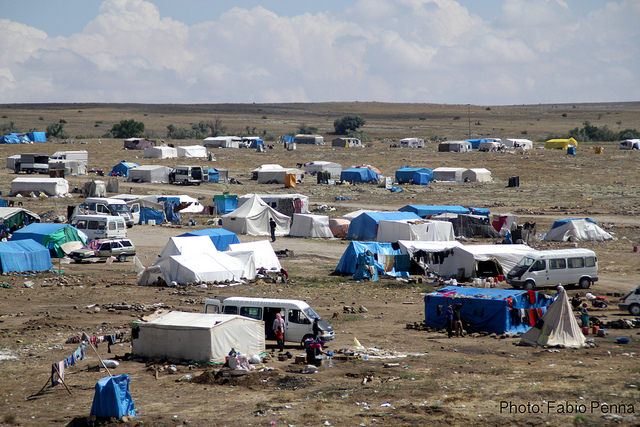
Syrian refugees’ camp in Cappadocia, Turkey. Photo by Fabio Sola Penna, published under Creative Commons license.
In an eloquent cri de coeur, Lina Sergie Attar wrote about the agony of Syria:
“Now, the everyday violence and death Syrians witness is no longer recorded in full force unless events surpass the daily ‘acceptable’ quota of death—like it did on August 16 in Douma, after more than 100 people were killed by a regime aerial attack on a crowded marketplace. These kinds of mass tragedies, like the chemical weapons attack in 2013 and the Daraya massacre in 2012, capture the world’s attention—headlines, outrage, condemnation—for a few moments before Syria’s suffering once again fades to white noise. When the country has been reduced to smoldering ashes and its people have been forced into a mass exodus to new countries and new homes, our capacity to document—to speak or write and chant—dwindles. History collapses into a simple etcetera.”
More than four million refugees have fled Syria. Millions more remain inside Syria, but no longer in their own homes, internal refugees forced to flee for their lives. Continue reading
Filed under human rights, immigration

Photo by Kate Ter Haar, published under Creative Commons license.
In May the state of Washington contracted with the GEO Group, one of the largest for-profit prison companies in the U.S., to move up to 1,000 inmates from the state’s overcrowded prisons to its correctional facility in Michigan, thousands of miles from their homes and families. This makes family visits and connection with the community harder, though studies show that inmates who receive more visits are less likely to re-offend after release. Continue reading
Filed under human rights, prisons

Photo by Catholic United Financial, published under Creative Commons License.
Is Pope Francis a breath of fresh air, throwing Vatican windows wide open to the world again, heralding a new day for the Catholic Church? Or is he a cafeteria progressive, choosing only certain social issues — environment, refugees, the poor — and maintaining a hard line on others —acceptance of LGBT people, role of women, anything to do with sexuality? Continue reading
Filed under human rights

Monarchs loved the bright red zinnias in the Merriam Station Community Garden
Monarchs fluttered through the giant red zinnias during the Merriam Station Community Garden Day. A few people listened to the program as I wandered through the gardens, snapping photos of pumpkins and flowers. Some 70 well-tended garden plots occupy this spot, a block north of I-94 and not many blocks east of my home. Volunteers run the sign-up and clean-up details for the community garden. People grow vegetables and flowers in their individual plots, and also donate food to Keystone Midway Food Shelf, both from individual plots and from a plot dedicated to producing for the food shelf. Continue reading
Filed under St. Paul Notes

Yao Yang explains use of trellis
As I drive south on Highway 52 on a sunny Sunday afternoon, city and suburban landscapes give way to long vistas of corn and soybeans. Half an hour from home, I see rows of kale, lettuce, tomatoes, Brussels sprouts, flowers and other vegetables marching across neatly tended fields. That’s my destination: the Hmong American Farmers Association (HAFA) open house, celebrating two years on their Dakota County farm. Continue reading
Filed under food and farming
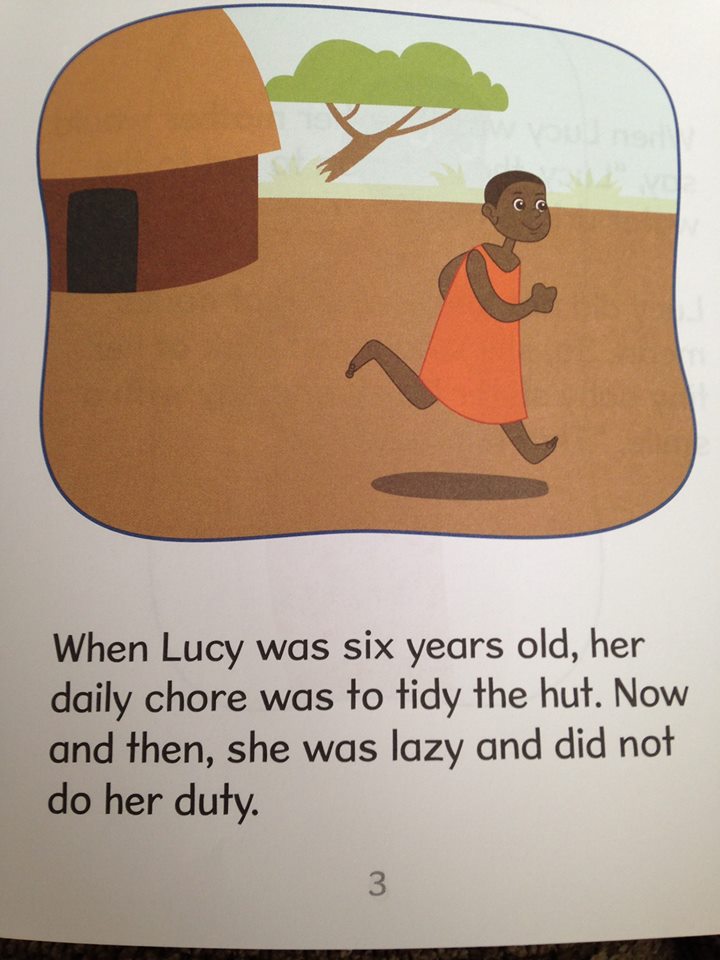
Page from one of the now-withdrawn Reading Horizons “Little Books”
The million dollar boondoggle that is Minneapolis Public Schools contract with Utah-based Reading Horizons continues. Now MPS wants Reading Horizons to rewrite its offensive and racist “Little Books.” MPS insists that “research shows this program has been successful in improving student outcomes around the country, including outcomes in diverse districts like ours.” Where is the research that MPS relied on? Does it exist? And if it doesn’t, what is explanation for a $1.2 million contract? Continue reading

Page from one of the now-withdrawn Reading Horizons “Little Books” –
Sarah Lahm started telling the story in August: A corporate contractor got more than a million dollars from Minneapolis Public Schools and delivered offensive teacher training and racist books. Nine or ten blog posts later, the story continues to grow and now the Washington Post has picked it up, crediting Lahm for her investigative reporting, which uncovered the scandal. Continue reading

Photo of forensics lab by Tym, published under Creative Commons license.
The Star Tribune reported last week that more than 3400 Minnesota rape kits have never been processed, characterizing the number as “part of a continuing national scandal.” Nationwide, the number of unprocessed rape kits may reach the hundreds of thousands.
A similar Cleveland Plain Dealer investigation, ongoing for the past five years, revealed serial rapists who were never prosecuted because rape kits were never processed. That, says Columbia Journalism Review, “means that every unsolved case is even more likely to be another rape waiting to happen, and that removing even a single rapist from the street eliminates an ongoing threat.” Continue reading
Filed under Uncategorized

Photo of February 2014 rally to raise minimum wage by Fibonacci Blue, republished under Creative Commons license.
Labor Day in September started as a way to co-opt the May 1 international worker solidarity celebration, but labor and unions deserve at least two days of celebration. On Labor Day 2015, recent news coverage includes wins and losses and on-going struggles. For example, we can celebrate an unemployment rate lower than it was at any time during the Reagan presidency, and lower than any time since April 2008. That’s good news — but the bad news is that young workers and black workers still suffer much higher unemployment rates. Continue reading
 Mary Turck