
 In the Minnesota special session, the legislature will decide on school funding (including teacher lay-offs and pre-K classes), water quality (including totally deregulating mining pollution and de-funding other anti-pollution measures), and whether to allow seed companies to tell lies on labels, among other issues. Anything there that interests you? If so, read on for a quick-and-easy guide to how the special session works, with more detailed articles linked at the end. Continue reading
Four things you need to know about Minnesota’s special session
Filed under agriculture, education, environment, food and farming
Beyond Pre-K: What MN schools need from the special session

Photo by Barnaby Wasson, published under Creative Commons license – https://www.flickr.com/photos/barnabywasson/279911701/in/set-72157594345855838
The debate over Governor Mark Dayton’s education bill veto focuses on the legislature’s rejection of his proposal for universal pre-kindergarten in Minnesota. But that’s only a small part of what’s wrong with the education bill. Continue reading
Filed under education
Buffer zones, bees, and turkeys in the special session

Photo by Bob Peterson. Published under Creative Commons license.
What’s wrong with the agriculture, environment and natural resources bill? It’s hard to know where to begin. Partly, the problem is the bill is too damn big. Along with the budget items, (mostly) Republican legislators threw in a pile of bad laws that they thought they could get through at the last minute. They figured, wrongly as it turned out, that Governor Dayton would focus only on the education bill and would let them get away with murder in environmental rollbacks. They were wrong.
Filed under environment, food and farming
Contingent: a nice name for precarious, underpaid work

Photo by photologue_np , published under Creative Commons license.
Forty percent of U.S. workers are “contingent,” and, for most of us, that’s not good. Contingent means that you don’t have a “permanent jobs with a traditional employer-employee relationship.” So we are the self-employed (3.3 percent), part-time (16.2 percent), independent contractors (12.9 percent), contract workers (3.0 percent), on-call (3.5 percent), and agency temps (1.3 percent). I’ve been in all of those categories. It’s not pretty.
As a contingent worker, you usually don’t have health insurance, sick days or paid holidays or vacation. (Sure, take Christmas Eve off. In fact, take the whole week off, since our offices will be closed. Just don’t expect a paycheck. Merry Christmas!) Continue reading
Filed under work
More than saints and superheroes

Photo by Franco Folini. Published under Creative Commons license. Mural: Tribute to Archbishop Oscar Romero by Jamie Morgan, 2001, Balmy Alley, San Francisco.
The Catholic Church took one more step toward declaring Archbishop Óscar Romero a saint this week. To millions of people, he is already a saint, a hero and — more importantly — a human inspiration to emulate. Saints and superheroes can seem out of reach to ordinary people. Superman can stop a speeding bullet and leap tall buildings with a single bound. Óscar Romero could not, but he remains now and forever presente, here with us as family and friend and challenge. Continue reading
Filed under human rights
Three reasons Dayton should veto the environmental bill
 The Republican-deformed agriculture and environment budget bill attacks Minnesota waters, bees, and the MPCA citizen board. And that’s just the beginning of a long list of problems with the bill. Continue reading
Filed under agriculture, environment
End homelessness with Housing First
We actually can solve homelessness. Projects from Utah to Washington, D.C. have shown that an approach called Housing First works. The Washington Post describes the idea as “a model so simple children could grasp it, so cost-effective fiscal hawks loved it, so socially progressive liberals praised it.” Continue reading
Filed under housing
In St. Paul: building a homeless shelter and making more people homeless
The Dorothy Day Center just launched a campaign to raise $40 million for a new homeless shelter, which should relieve some of the current elbow-to-elbow overcrowding. Ironically, at just about the same time, Como by the Lake apartments announced a move that may make more people homeless.
Ruben Rosario reported recently that the owners of the 99-apartment Como by the Lake complex notified elderly residents that they will end participation in subsidized Section 8 rentals. Residents of 57 of the 99 units currently use the project-based Section 8 federal rent subsidies.
Section 8 benefits both tenants and landlords, making housing affordable to low-income tenants and rentals profitable to landlords. A project-based Section 8 program offers subsidies to developers or owners of multi-family buildings to rent some or all of their units to eligible low-income tenants. These subsidies stay with the apartment. If a tenant leaves, they cannot use the subsidy in another apartment.
A second Section 8 program offers subsidies to tenants, who then have to find a landlord willing to rent to them. These subsidies are portable — they go with the tenant. Unfortunately, the individual Section 8 voucher program has a miles-long waiting list.
In a tight housing market, Como by the Lake can charge higher rents than allowed by Section 8 and make bigger profits. That leaves elderly and disabled tenants facing an expensive housing market, without the assistance they have had until now.
Maybe they can spend more money for higher rents if they eat one meal less per day. Or if they cut pills in half instead of taking the prescribed dosage. If they end up homeless, they can join the people jockeying for floor space at the crowded Dorothy Day Center in downtown St. Paul.
According to the Star Tribune, the elderly are a growing part of the homeless population:
“The campaign comes at a time when agencies across the Twin Cities are scrambling to handle a growing older homeless population. Staff at shelters in Hennepin and Ramsey counties say the age wave has hit and they are not equipped to handle it.”
The first phase of the Dorothy Day Center expansion will offer expanded emergency shelter, but it won’t be ready until some time in 2016. The second phase will include a Connection Center, to provide space for services such as the Veterans Administration, as well as four floors of permanent housing. That phase is planned for 2018. If you want to contribute, here’s the link.
Related post: End homelessness with Housing First
Filed under housing, St. Paul Notes
From bib overalls to hazmat suits
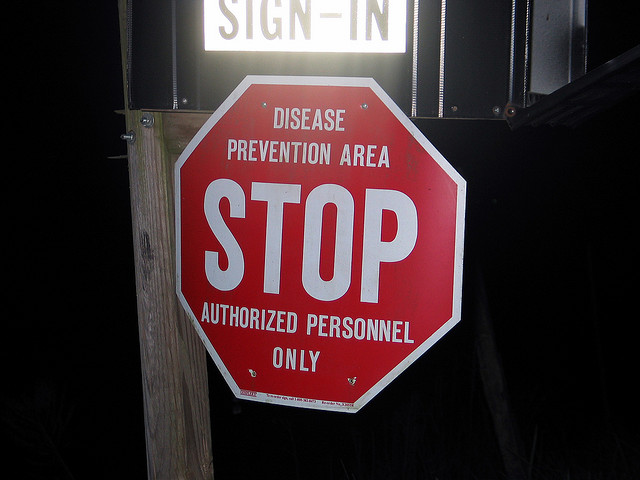
Photo by Taber Andrew Bain. Published under Creative Commons license.
“They had hazmat suits,” the farmer said, “and they sprayed the tires of their truck with disinfectant, too.”
“They” are inspectors checking for avian flu. Coming from all over the United States, the teams travel farm to farm, testing poultry for avian flu. The highly contagious disease has killed more than five million birds — mostly turkeys — in Minnesota and more than 25 million — mostly egg-laying chickens — in Iowa. There is no known treatment or vaccine. Once it hits a flock, the H5N2 virus kills quickly, and kills 90 percent of the birds in those flocks. Continue reading
Filed under food and farming
Talking turkey — and chickens and avian flu

Photo by Watt Publishing. Published under Creative Commons license.
This spring, avian flu has killed millions of turkeys and chickens in the Upper Midwest. As the country’s turkey champion, Minnesota produces about 46 million turkeys per year. As of May 12, 85 Minnesota flocks in 21 counties have been hit by this bird flu. More than five million Minnesota birds have been affected. This avian flu outbreak has hit Minnesota particularly hard, with 85 of about 133 affected flocks in the state.
Filed under food and farming

 Mary Turck