Singing songs of hope: Gwendolyn Brooks, Nikki Giovanni, Ronnie Gilbert

The Daily Kos’s eloquent essay, In Praise of Poets: Gwendolyn Brooks and Nikki Giovanni, and news of Ronnie Gilbert’s death came together today, reminding me of the power and importance of poetry in my life, in our lives.  Continue reading →

Leave a comment

Filed under Uncategorized

Fast Track to nowhere: Part 1 – Get big or get out

We already have an example of how free trade fails in NAFTA, passed in 1993 and still wreaking havoc in agriculture in Mexico and the United States. NAFTA and the 1996 Farm Bill worked together to force a “get big or get out” agenda.

Confused about the fast track trade debate? You’re not alone. The eye-glazing complexities of trade policy make a lot of people throw up their hands and give up. But you shouldn’t do that. Trade policy affects air, water, soil, plants, pollinators, immigration, workers’ rights, local control, zoning … the list goes on and on. “Free trade” legislation sells out all of our rights. This is the first of a series of posts explaining, in plain language, some of the reasons “free” trade costs all of us.

The Institute for Agriculture and Trade Policy, headquartered right here in Minnesota, analyzed NAFTA’s impact on livestock farming, noting that the top four beef-farming companies — Cargill, Tyson, JGF and National Beef — increased their market share from 69 percent in 1990 — pre-NAFTA — to 82 percent in 2012. IATP explained:

“Those corporations take advantage of the rules in NAFTA to operate across borders. U.S. companies grow cattle in Canada and pork in Mexico that they then bring back to the U.S. for slaughter and sale. Along the way, independent U.S. hog and poultry producers have virtually disappeared. Efforts to at least label those meats under Country Of Origin Labeling (COOL) laws have been vigorously opposed by the Mexican and Canadian governments. Meanwhile those factory farms contribute to grow environmental devastation in all three countries.”

NAFTA devastated small Mexican farmers, flooding their markets with cheaper U.S. corn. In the United States, IATP reported:

“… commodity prices dropped like a stone, and Congress turned to “emergency” payments, later codified as direct payment farm subsidies, to clean up the mess and keep rural economies afloat.

“Then, as new demand for biofuels increased the demand for corn, and investors turned from failing mortgage markets to speculate on grains, energy and other commodities, prices soared. It wasn’t only the prices of farm goods that rose, however, but also prices of land, fuel, fertilizers and other petrochemical based agrochemicals. Net farm incomes were much more erratic.”

NAFTA is already in full force. Next up: Trans Pacific Partnership (TPP) and the Transatlantic Trade and Investment Partnership (TTIP), which are like NAFTA on steroids. While their texts are still secret, some provisions have been made public and some have been leaked by WikiLeaks. These include provisions such as prohibitions on Country of Origin Labeling (COOL), which tells consumers where food comes from, and limits on individual countries’ ability to restrict GMOs or food additives.

Today, Congress is considering “fast track” provisions for these trade agreements. As Minnesota Congressional Representative Keith Ellison wrote recently:

“We in Congress don’t precisely know, because the rules governing negotiations mean we don’t have access to full draft texts and staff cannot be present when we see individual sections. We also cannot provide negotiating objectives for the US Trade Representative. The administration’s request for “fast track” authority is a request for Congress to rubber-stamp a text that more than 500 corporate representatives were able to see and influence.”

Fast Track means that Congress agrees, in advance, that they will not make any amendments to the trade deals presented, but will just vote yes or no. The president will negotiate the gigantic trade deals, under the pretense of increasing trade and benefiting the economy. . Congress could then vote the deal up or down, but could not amend them to remove any specific problems.

For detailed analysis of the trade deals and debates, I recommend the Institute for Agriculture and Trade Policy. And keep watching News Day for more short articles on specific parts of the deals.


1 Comment

Filed under agriculture, food and farming

Why I won’t donate to the Red Cross

American’s biggest disaster relief organization is a disaster. And American’s richest university doesn’t need your money. Two June 3 stories of incompetence and extreme wealth signal time to re-evaluate and re-direct charitable giving.

Continue reading →

1 Comment

Filed under Uncategorized

Cheap fries, high costs to Minnesota land and water

Sebeka, Minnesota vegetable farmer Kathy Connell went to McDonald’s last week — not the restaurant, but the annual shareholder meeting. She had a message about pine forests, potatoes and Minnesota water, but McDonald’s shut her out. Connell, along with other Minnesotans and the Minnesota Department of Natural Resources, is concerned about R.D. Offutt Company’s use and misuse of land and water in northwestern Minnesota’s Cass, Hubbard, Becker and Wadena counties, part of the Pineland Sands Aquifer. Continue reading →

1 Comment

Filed under agriculture, environment, food and farming

My brother, Professor Brown and avian flu

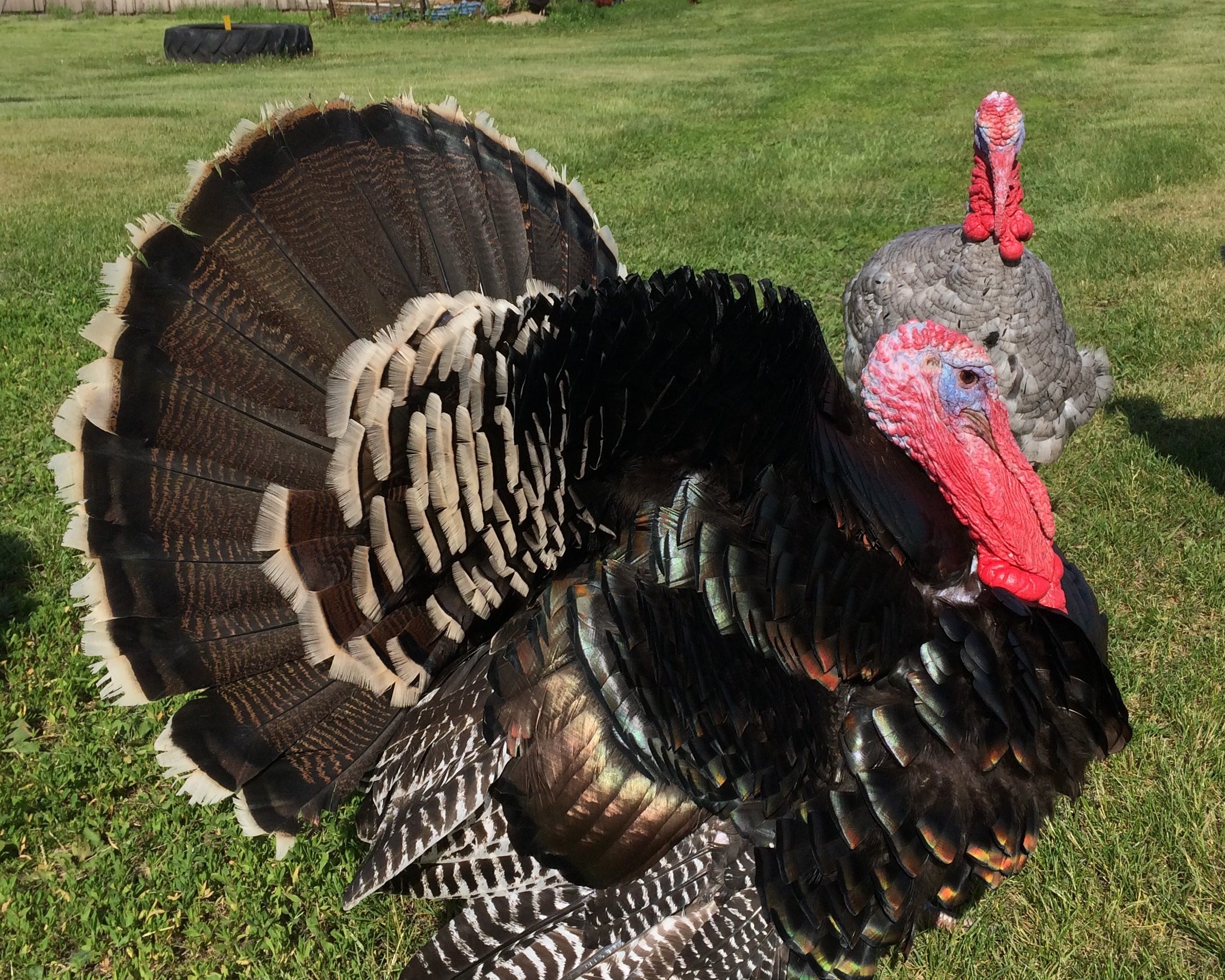
turkey and henProfessor Brown, Belushi, Bronzie and B2 strutted toward me across the June-green farmyard, accompanied by their entourage of hens. Back toward the barn, the neat little Production Red laying hens and glossy Black Jersey Giants scratched in the gravel, overseen by Goliath and the other Jersey Giant roosters.

They’re obviously healthy, and even state-certified healthy, but in quarantine nonetheless. Why? Because some unidentified commercial flock in the area, tens of thousands of birds that never once walked outdoors in sunlight or scratched the ground for bugs, was infected by avian flu and destroyed to the last bird. Continue reading →

5 Comments

Filed under agriculture, food and farming

Today’s MN state lay-off notices — here’s the list

From 15 people at the Bureau of Mediation Services to 115 at the Perpich Center for Arts Education to more than 4,000 at the Department of Natural Resources, lay-off notices go out to Minnesota state employees today. If the legislature and the governor don’t reach budget deals by the end of the month, more than 9,000 government employees could be out of work. Here’s the list: Continue reading →

Leave a comment

Filed under work

Four things you need to know about Minnesota’s special session

mct state capitolIn the Minnesota special session, the legislature will decide on school funding (including teacher lay-offs and pre-K classes), water quality (including totally deregulating mining pollution and de-funding other anti-pollution measures), and whether to allow seed companies to tell lies on labels, among other issues. Anything there that interests you? If so, read on for a quick-and-easy guide to how the special session works, with more detailed articles linked at the end. Continue reading →

4 Comments

Filed under agriculture, education, environment, food and farming

Beyond Pre-K: What MN schools need from the special session

Photo by Barnaby Wasson, published under Creative Commons license - https://www.flickr.com/photos/barnabywasson/279911701/in/set-72157594345855838

Photo by Barnaby Wasson, published under Creative Commons license – https://www.flickr.com/photos/barnabywasson/279911701/in/set-72157594345855838

The debate over Governor Mark Dayton’s education bill veto focuses on the legislature’s rejection of his proposal for universal pre-kindergarten in Minnesota. But that’s only a small part of what’s wrong with the education bill. Continue reading →

3 Comments

Filed under education

Buffer zones, bees, and turkeys in the special session

What’s wrong with the agriculture, environment and natural resources bill? It’s hard to know where to begin. Partly, the problem is the bill is too damn big. Along with the budget items, (mostly) Republican legislators threw in a pile of bad laws that they thought they could get through at the last minute. They figured, wrongly as it turned out, that Governor Dayton would focus only on the education bill and would let them get away with murder in environmental rollbacks. They were wrong.

Continue reading →

4 Comments

Filed under environment, food and farming

Contingent: a nice name for precarious, underpaid work

Photo by photologue_np , published under Creative Commons license.

Photo by photologue_np , published under Creative Commons license.

Forty percent of U.S. workers are “contingent,” and, for most of us, that’s not good. Contingent means that you don’t have a “permanent jobs with a traditional employer-employee relationship.” So we are the self-employed (3.3 percent), part-time (16.2 percent), independent contractors (12.9 percent), contract workers (3.0 percent), on-call (3.5 percent), and agency temps (1.3 percent). I’ve been in all of those categories. It’s not pretty.

As a contingent worker, you usually don’t have health insurance, sick days or paid holidays or vacation. (Sure, take Christmas Eve off. In fact, take the whole week off, since our offices will be closed. Just don’t expect a paycheck. Merry Christmas!) Continue reading →

Leave a comment

Filed under work